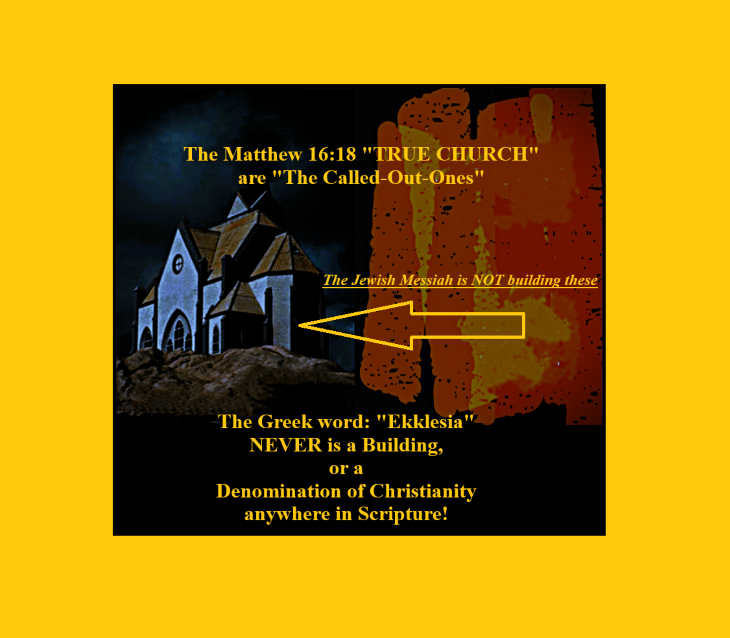
“Church” Is Not Correct
Understanding Matthew 16:18 first requires looking at the context which begins in Matthew 16:13 “When Jesus came into the coasts of Caes-a-re’a Philippi,
He took them to “THE GATES OF HELL”!
“...and the gates of hell will not prevail…“
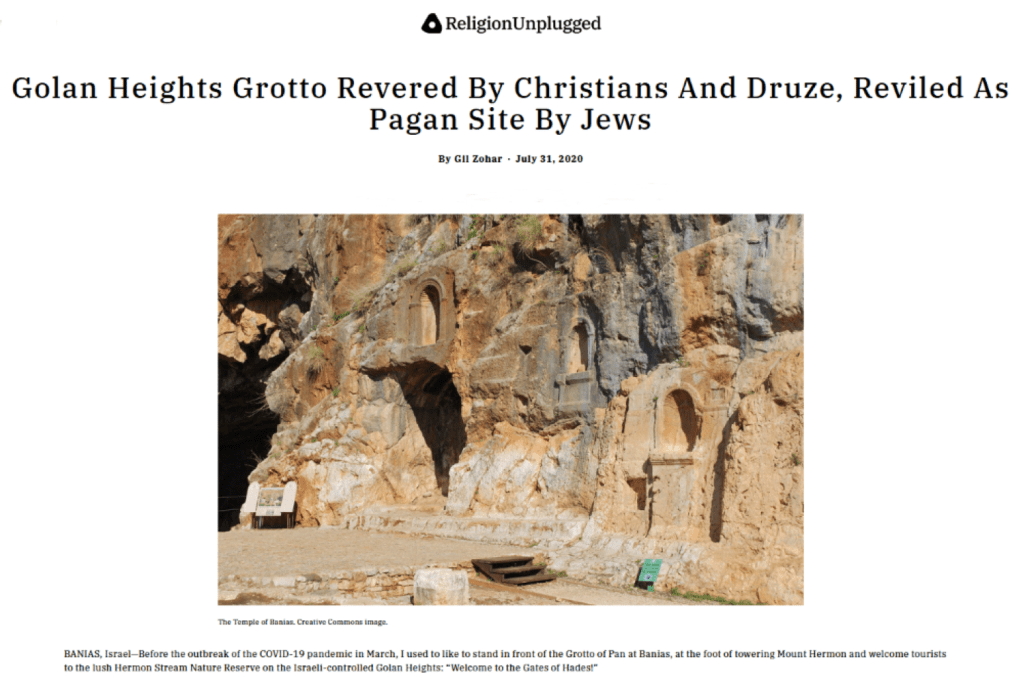
1. The Location: Caesarea Philippi — “The Gates of Hell”
Matthew 16:13 states:
“When Jesus came into the coasts of Caesarea Philippi…”
This region was known in the first century for:
- a pagan sanctuary
- a cave believed to be an entrance to the underworld
- a site referred to as “the Gates of Hell”
This is the setting for the statement:
“…and the gates of hell will not prevail…”
The location itself is part of the message. The declaration is made in front of the symbol of Satan’s jurisdiction.
“...he asked his disciples, saying, Whom do men say that I the son of man am?“
“SON OF MAN” is one of his titles. It comes from Daniel 7:13-14 “…Son of man…was given…dominion, and glory, and a kingdom…”
2. The Question: The Identity of the Son of Man
The conversation begins with:
“Whom do men say that I, the Son of Man, am?”
“Son of Man” is not a generic phrase. It is a royal, Messianic title taken directly from Daniel 7:13–14:
“…one like the Son of Man… was given dominion, and glory, and a kingdom…”
This title identifies the speaker as:
- the One who receives dominion
- the One who receives a kingdom
- the One who receives authority over all nations
This is the legal and prophetic backdrop for the statement:
“I will build My ekklesia…”
The speaker is the Davidic King who has authority to build, restore, and rule.
3. The Statement: “I Will Build My Ekklesia”
The Greek text reads:
“…I will build (οἰκοδομέω) My ekklesia…”
Ekklesia means:
- called‑out assembly
- gathered people
- covenant community
It is the Greek equivalent of the Hebrew qahal (קָהָל), the assembly of YHVH.
The statement is made:
- by the Son of Man
- at the Gates of Hell
- in the context of dominion, kingdom, and jurisdiction
This is not the founding of a later Gentile religious institution. It is the restoration of the covenant assembly promised in the prophets.
4. The Hebrew Verb Behind “Build” — בָּנָה (banáh)
The Hebrew Scriptures define what the Messiah is expected to build.
Banáh means:
- build
- establish
- restore
- construct a dynasty
- rebuild what has fallen
This verb is used in the Davidic Covenant (2 Samuel 7; 1 Chronicles 17), which forms the foundation for Matthew 16:18.
Returning to the language, culture, and covenant framework of the Jewish Messiah. The phrase “…build my Church…” never existed in His vocabulary. He spoke Hebrew, Aramaic, and Greek, and none of these languages used the English institutional term “church.”
The key Greek term in Matthew 16:18 is “ekklesia” (ἐκκλησία, G‑1577).
Matthew 16:18 — Original Greek
“…on this rock I will build my ekklesia…”
Ekklesia (Literal meaning): called‑out assembly, gathering, congregation. In the light of I Chronicles 17:1-15 we can easily see that “his ekklesia” refers to those who are adopted into the line of King David and are “The Temple of God”. Paul identifies the location of the Temple in three specific passages, and in each case the answer is the same:
1. I Corinthians 3:16–17
The Temple is the gathered assembly — the collective body.
“You (plural) are the Temple of God…”
2. I Corinthians 6:19
The Temple is the individual believer’s body indwelt by the Spirit.
“Your body is a Temple of the Holy Spirit…”
3. Ephesians 2:19–22
The Temple is the covenant household being built together.
“A holy Temple in the Lord… built together for a dwelling place of God…”
In classical Greek and in the Septuagint, ekklesia referred to:
- civic assemblies
- tribal gatherings
- the qahal (קָהָל) of Israel — the covenant people
The term was relational and covenantal, not institutional.
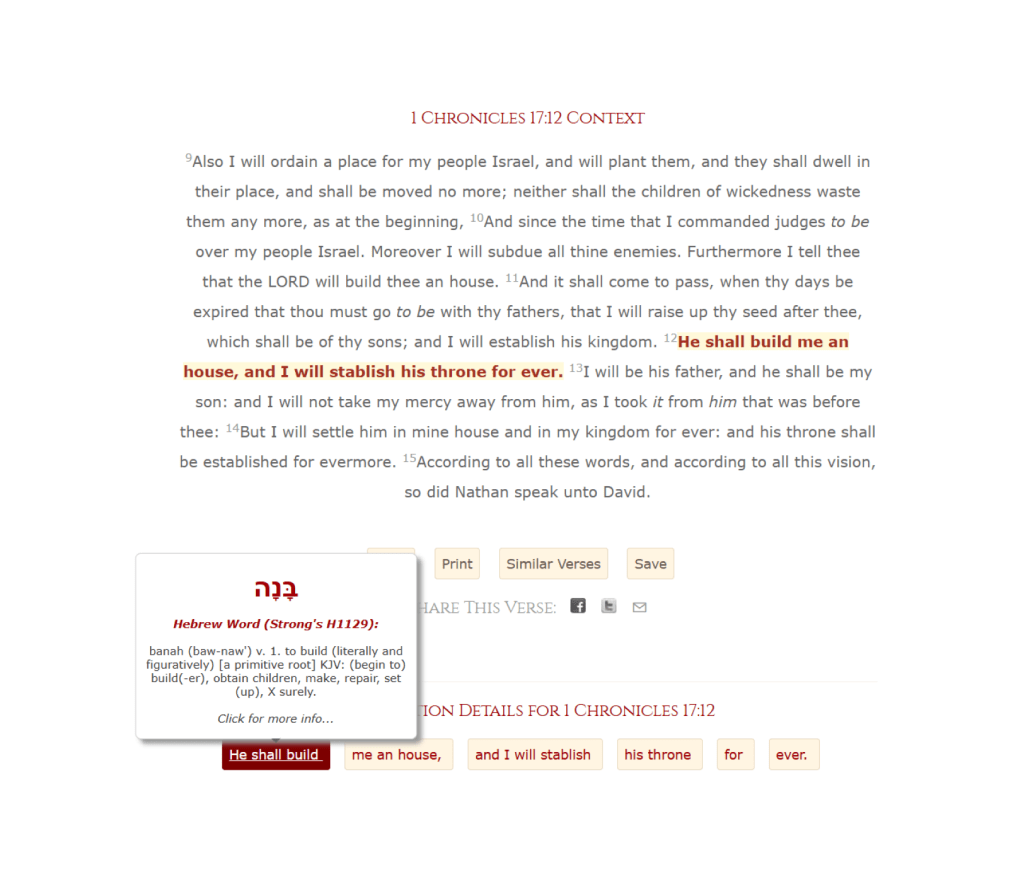
The Hebrew Verb “Build” — בָּנָה (banáh, H-1129)
Meaning: to build, construct, establish, restore
Range of usage in Scripture:
- build a physical structure
- establish a family or dynasty
- restore what has fallen
- covenant‑based construction (YHVH “building” David’s house)
The verb banáh is both literal and covenantal. It is used when God promises to build something that endures across generations.
What the Hebrew Scriptures Say the Messiah Will “Build”
A search of the Tanakh reveals a consistent pattern.
A. The House (בַּיִת / bayit) of David — a dynasty, not a building
2 Samuel 7:12–14; 1 Chronicles 17:10–14
“I will build you a house.” (banáh)
This “house” is a lineage, a covenant family, a restored royal line.
It is not a physical temple.
This covenant forms the background of Matthew 16:18.
B. The Temple — in a prophetic, restored sense
Prophets such as Amos, Isaiah, and Ezekiel describe God rebuilding:
- the fallen tent of David
- the sanctuary
- the dwelling place of God among His people
The emphasis is covenant restoration, not architecture.
C. The People Themselves — the rebuilt community
The prophets use banáh to describe the rebuilding of:
- the remnant
- the cities of Judah
- the covenant people
- the house of Israel
This is where qahal (assembly) and banáh (build) converge.
Why This Matters for Matthew 16:18
When the Messiah says:
“I will build my ekklesia…”
He is invoking the Hebrew prophetic expectation:
- the bayit of David will be built — the covenant family
- the qahal will be restored — the gathered people of God
- the remnant will be rebuilt — the Spirit‑filled assembly
Every element is Hebrew, covenantal, and prophetic.
Nothing in the Hebrew Scriptures indicates that the Messiah would build:
- a denomination
- a hierarchy
- a Gentile religious institution
- a building called “church”
The Scriptures repeatedly describe Him building:
- a people
- a household
- a dynasty
- a restored assembly
Messianic Prophecies That Describe What the Messiah Would Do
These prophecies define the mission behind Matthew 16:18.
1. Magnify Torah — Isaiah 42:21
2. Build the House of David — 1 Chronicles 17:10
3. Build a Temple for YHVH — 1 Chronicles 17:12
4. Establish the Davidic Kingdom — 2 Samuel 7:16
5. Break the yoke of Satan — Isaiah 14:24–27
6. Proclaim the opening of the prison — Isaiah 61:1
7. Bring out prisoners from the dungeon — Isaiah 42:7
8. Prevail against His enemies — Isaiah 42:13
9. Restore Adamic dominion — Psalm 8
10. Regather Israel — Isaiah 11:10–12
11. Establish justice for the nations — Isaiah 42:1–4
12. Open blind eyes — Isaiah 35:5; 42:7
13. Heal the brokenhearted — Isaiah 61:1
14. Bear iniquity and justify many — Isaiah 53:10–12
15. Make intercession for transgressors — Isaiah 53:12
16. Become a light to the nations — Isaiah 49:5–7
17. Bring the New Covenant — Jeremiah 31:31–34
18. Purify the priesthood — Malachi 3:1–3
19. Shepherd YHVH’s flock — Ezekiel 34:23–24; 37:24
20. Destroy oppressors — Isaiah 11:4
21. Judge between the nations and end war — Isaiah 2:2–4; Micah 4:1–3
22. Rebuild David’s fallen tent — Amos 9:11–12
23. Bring everlasting righteousness — Daniel 9:24
These prophecies define the work of the Messiah.
They also define the meaning of “I will build My ekklesia.”
The Key Connection
Matthew 16:18 is rooted in:
- 2 Samuel 7
- 1 Chronicles 17
- the prophetic rebuilding of Israel
Ekklesia = qahal
Build = banáh
My = Messianic covenant authority
House = restored Davidic family
Assembly = Spirit‑filled remnant of Israel
This is the original Jewish meaning prior to later reinterpretations.
The Shift to “Church”
The English word church developed from:
- Greek kuriakon (“belonging to the Lord”)
- through Germanic forms: kirche, cirice, church
This term:
- emphasizes ownership and location
- became associated with buildings and hierarchy
- was never a translation of ekklesia
By inserting “church” into Matthew 16:18, translators reframed the Messiah’s statement to imply the founding of a new religious institution rather than the restoration of the covenantal assembly of Israel.
Christianity, as a later system, was historically constructed; it was not divinely founded in Matthew 16:18.
Contextual Anchor
The question in Matthew 16:18 concerns the identity of the Son of Man — the Daniel 7:13 figure.
The answer is found in 1 Chronicles 17:10–15, where YHVH promises to build David a house and establish his throne.
Matthew 16:18 is about:
- the Kingdom of God (Daniel 2:44)
- the House and Throne of David (Luke 1:32–33)
- the transfer of jurisdiction (Colossians 1:13)
Not the founding of a Gentile religious institution.
To return to our “NAVIGATION PAGE” just click the image below: