SHALIACH (The Sent One)
Shaliach is a Jewish Legal agent authorized to act with the full authority of the sender. In Jewish law, the shaliach is recognized as “the hand of the one who sends him,” meaning the sender is legally bound by the agent’s actions. This is the jurisdictional backbone behind the Greek term apostolos (apostle): one commissioned, empowered, and sent to carry out the will of another.
Messiah was sent to Jews: “I am not sent but unto the lost sheep of the house of Israel.”
(Matt 15:24)
One aspect of his being “SENT” to the Jews, is seen in the word: “BUILD”. (Matthew 16:18)
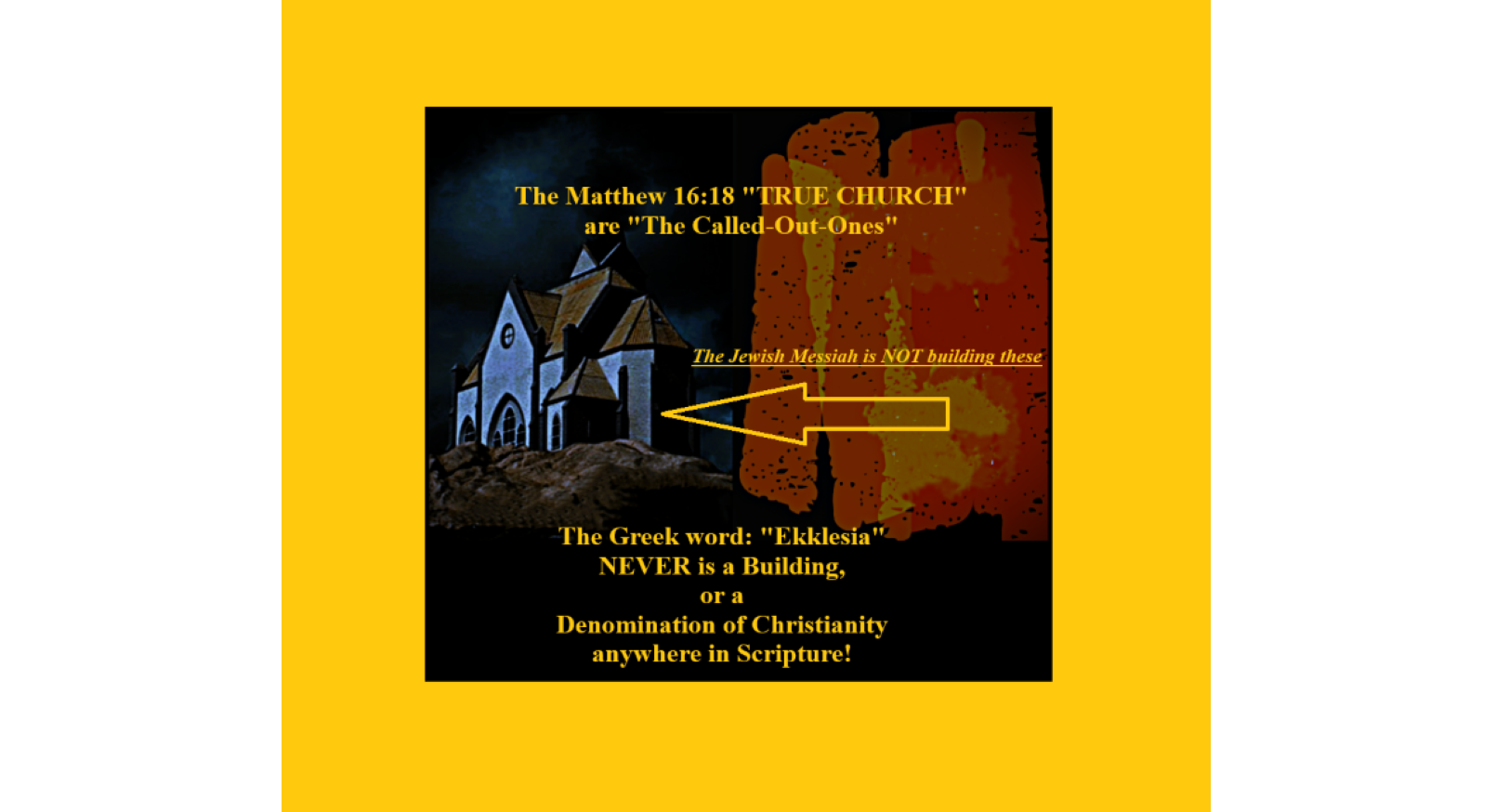
What was he supposed to build?
This Step will be on an exhaustive look at the Hebrew word for “BUILD”.
What is Messiah supposed to “BUILD” or “EDIFY”?
He was sent to BUILD the House of David
Messiah was prophesied to build, restore, and raise up the fallen House of David (2 Samuel 7:12–14; Amos 9:11), meaning He would re‑establish the covenantal dynasty through a Spirit‑filled people who belong to the Davidic King.
He was sent to BUILD the Temple of YHVH
Messiah was prophesied to build the Temple of YHVH (1 Chronicles 17:12; Zechariah 6:12–13), which He fulfills by forming a Spirit‑indwelt dwelling place made of living stones, not a physical structure.
He was sent to BUILD the Assembly that the Gates of Hades cannot overpower
Messiah was sent to build His ekklesia (Matthew 16:18) — the jurisdictional assembly of those transferred out of Satan’s authority (Acts 26:18), a people legally belonging to the Last Adam.
He was sent to EDIFY a Kingdom People
Messiah was sent to edify, strengthen, and establish a people who walk in the Spirit (Isaiah 42:6–7; Isaiah 61:1–3), forming a community governed by the Kingdom of God rather than the Sinai covenant.
1. The Hebrew Verb “BUILD” — בָּנָה (banáh)
Meaning: to build, construct, establish, restore
Range of meaning in Scripture:
- Build a physical structure (house, city, altar)
- Establish a family or dynasty
- Restore or rebuild what has fallen
- Covenant‑based construction (God “building” David’s house)
This is crucial: banáh is both literal and covenantal. It is the verb used when God promises to build something that lasts beyond one generation.
2. Where the Hebrew Bible says the Messiah will “BUILD”
When you search the Tanakh for what God’s Anointed is supposed to build, the pattern is unmistakable:
A. The House (בַּיִת / bayit) of David — a dynasty, not a building
2 Samuel 7:12–14; 1 Chronicles 17:10–14 God promises David:
“I will build you a house.” (בָּנָה — banáh)
This “house” is a lineage, a covenant family, a restored royal line. It is not a physical temple.
This is the exact covenant background Matthew is invoking.
B. The Temple — but only in a prophetic, restored sense
Prophets like Amos, Isaiah, Ezekiel speak of God rebuilding:
- the fallen tent of David
- the sanctuary
- the place where God dwells among His people
But again, the emphasis is restoration of covenant relationship, not architecture.
C. The People Themselves — the rebuilt community
The prophets repeatedly use banáh to describe God rebuilding:
- the remnant
- the cities of Judah
- the covenant people
- the “house of Israel”
This is where qahal (assembly) and banáh (build) converge.
3. Why this matters for Matthew 16:18
When Yeshua says: “I will build my ekklesia…”
He is not inventing a new Greek religious institution.
He is invoking the Hebrew prophetic expectation:
He will banáh the bayit of David — the covenant family.
He will rebuild the qahal — the gathered people of God.
He will restore the remnant — the Spirit‑filled assembly.
Every one of these is Hebrew, covenantal, and rooted in prophecy.
Nothing in the Hebrew Scriptures ever says the Messiah will “build” a replacement religion for all Jews to “convert to”.
Therefore, “Christianity” or a denominational Church of it is NOT what he is “building”.
He isn’t building:
- a denomination
- a hierarchy
- a Gentile religious institution
- a building called “church”
But the Scriptures repeatedly say He will build a people, a household, a dynasty, a restored assembly.
4. The Key Connection
Matthew 16:18 connects to II Samuel 7:3-17, I Chronicles 17:3-15 and the prophetic rebuilding of Israel.
- Ekklesia = qahal
- Build = banáh
- My = Messianic covenant authority
- House = restored Davidic family
- Assembly = Spirit‑filled remnant of Israel
This is the original Jewish meaning before later Gentile reinterpretations.
The English word “church” comes from:
- Greek kuriakon (“belonging to the Lord”)
- Evolved through Germanic: kirche, cirice, church
This term:
- Emphasizes ownership and location
- Became associated with buildings, hierarchy, and institutional control
- Was never a direct translation of ekklesia
Christianity was historically invented; it was NOT divinely founded.
The translation of “ekklesia” into “church” in Matthew 16:18 was not just linguistically imprecise—it was theologically strategic.
Let’s walk through the forensic evidence and show why this mistranslation made the rupture plausible.
- Shared Vocabulary
“Church” sounded familiar and sacred—but it carried post-apostolic baggage. - Institutional Reinforcement
The Church Fathers used this mistranslation to justify:- Hierarchical control
- Apostolic succession through bishops
- Detachment from Torah and Jewish identity
- Doctrinal Reframing
The shift allowed Christianity to present itself as divinely founded, rather than historically invented.
- Dr. B. Brandon Scott notes that ekklesia is best translated as “gathering,” not “church,” because the modern term misrepresents the original intent.
- Other sources confirm that Jesus likely spoke Aramaic, and the Greek ekklesia was Matthew’s interpretive choice—not a direct quote.
- The word church evolved through linguistic layers that had nothing to do with the original covenantal assembly.
The mistranslation of ekklesia into “church” in Matthew 16:18 made the deception plausible. It allowed post-apostolic leaders to claim divine authority for a system the Jewish Messiah never founded.
The restoration framework exposes this rupture with forensic clarity.
The context of this passage is seen in the question itself.
Yeshua is using his Daniel 7:13 title of “THE SON OF MAN” and asking whether or not anyone knows that he is the prophesied “Jewish Messiah”.
To discover what the Messiah is supposed to do, we translate these two words back
into their “HEBREW” context and find I Chronicles 17:10-15.
Almighty God promised King David that He would “build” him “A HOUSE” and build his throne/kingdom. Colossians 1:13 shows this being fulfilled, so Matthew 16:18 is about “The Kingdom of God” (Daniel 2:44) and King David’s house and throne (Luke 1:32-33)
Connecting the word: “YOKE”
“Take my yoke upon you and learn of me; for I am meek and lowly in heart: and ye shall find rest unto your souls.” (Matthew 11:29)
Isaiah 14:25 (KJV) — “That I will break the Assyrian in my land, and upon my mountains tread him under foot: then shall his yoke depart from off them, and his burden depart from off their shoulders.”
Isaiah 14 and the “purpose” of YHVH to restore the jurisdiction Adam lost to humanity through the mistake by Satan in the crucifixion of an innocent man. Daniel 7:13-15, Acts 26:18. Colossians 1:13 Revelation 5:9-10.
This connection is not only “interesting,” it reveals the strategically perfect plan of YHVH.
Matthew 16:18 shows His plan in operation. That is why Satan countered with his “Replacement Theology” and created “THE CHURCH” as a Gentile run institution.
THE JURISDICTIONAL CONNECTION OF THE WORD “YOKE”
1. The Two Yokes in Scripture
Matthew 11:29 “Take my yoke upon you and learn of me; for I am meek and lowly in heart: and ye shall find rest unto your souls.”
Isaiah 14:25 “…then shall his yoke depart from off them, and his burden depart from off their shoulders.”
These two “yokes” are not the same. They represent two jurisdictions.
- Isaiah 14 — the oppressor’s yoke (Satan’s jurisdiction over humanity through Adam’s failure).
- Matthew 11 — the Messiah’s yoke (the restored jurisdiction offered to humanity through the Last Adam).
Matthew 11 only makes sense after Isaiah 14.
2. Isaiah 14 — YHVH’s Declared Purpose
Isaiah 14:24–27 is the constitutional declaration of YHVH’s intent:
- break the oppressor
- remove his yoke
- restore rightful rule
- accomplish a purpose that cannot be reversed
This is the legal foundation for everything that follows in Scripture.
3. Daniel 7 — The Transfer of Dominion
Daniel 7:13–14 shows the Son of Man receiving:
- dominion
- glory
- a kingdom
- all peoples, nations, languages
This is the jurisdiction Adam lost (Gen 1:26–28) and Satan held (Isa 14:12–17).
The transfer occurs because Satan made a fatal legal mistake: he crucified an innocent man (1 Cor 2:8).
4. Acts 26:18 — The Purpose Applied to the Nations
Paul describes the result:
- to open their eyes
- to turn them from the authority of Satan unto God
- to receive forgiveness
- to receive an inheritance
This is Isaiah 14 in operation.
5. Colossians 1:13 — The Completed Transfer
Paul states the jurisdictional reality:
- “delivered from the power of darkness”
- “translated into the kingdom of His dear Son”
The yoke of the oppressor is removed. The yoke of Messiah is offered.
6. Revelation 5:9–10 — The Global Outcome
The Lamb’s blood:
- redeems
- purchases
- restores
- makes a kingdom of priests
- positions them to reign on the earth
This is the final expression of Isaiah 14’s purpose.
7. Matthew 16:18 — The Plan in Operation
When Yeshua says:
“I will build my assembly…”
He is announcing the jurisdictional replacement:
- not a Gentile institution
- not Rome’s invention
- not the later “Church” created by Satan’s counter‑move
- but the restored Adamic jurisdiction under the Last Adam
This is why Satan immediately launched Replacement Theology— to create a counterfeit “church” that disconnects Gentiles from Israel’s King and Israel’s covenants.
8. The Yoke Connection in One Sentence
Isaiah 14 removes Satan’s yoke; Matthew 11 offers Messiah’s yoke; Daniel 7 transfers the dominion; Acts 26:18 applies it; Colossians 1:13 confirms it; Revelation 5:9–10 completes it; Matthew 16:18 reveals the strategy.
The Missing Layer: Why the Messiah Had to “Build/Edify” Anything at All
Our Step 4 page already proves that “build my ekklesia” means:
- rebuild the house of David
- restore the qahal
- re‑establish the kingdom
- gather the remnant
But this raises a deeper question:
Why did the kingdom need to be rebuilt in the first place?
This is where our proposed article becomes powerful.
1. Isaiah 14 — The Jurisdiction Problem
Isaiah 14 describes a being who:
- weakened the nations
- ruled over them
- held them in captivity
- exercised jurisdiction over the earth
And in verse 17, he is explicitly called:
“the one who made the world a wilderness… and opened not the house of his prisoners.”
This is the jurisdiction Yeshua references in Matthew 16:18:
- “the gates of hell”
- the legal authority holding humanity in bondage
Our Step 4 page already hints at this, but this article would make the legal framework explicit.
2. Adam’s Forfeiture → Satan’s Temporary Jurisdiction
Genesis frames Adam as:
- vice‑regent
- image‑bearer
- steward of earth’s authority
When Adam fell, he didn’t just sin — he transferred jurisdiction.
This is why Satan can say to Yeshua in Luke 4:6
“All this authority has been given to me…”
And Yeshua does not dispute it.
This is the background for why something had to be rebuilt.
3. The Crucifixion Error — The Turning Point of Jurisdiction
Satan’s fatal mistake was participating in the unjust execution of an innocent man.
This is the legal hinge of the entire New Testament.
Because:
- an innocent man cannot be lawfully condemned
- shedding innocent blood reverses jurisdiction
- the accuser loses legal standing
- the kingdom transfers back to the rightful heir
This is why the resurrection is not just a miracle — it is a legal verdict.
4. Daniel 7:13–14 — The Transfer of Dominion
Daniel sees:
- the Son of Man
- approaching the Ancient of Days
- receiving dominion, glory, and a kingdom
This is the moment the jurisdiction is restored.
This is why Yeshua uses the title “Son of Man” in Matthew 16:13 — the very passage our Step 4 page is built on.
He is signaling the Daniel 7 transfer.
5. Acts 26:18 — The Mission Statement
Paul summarizes the Messiah’s purpose:
“to open their eyes… to turn them from darkness to light, and from the power (jurisdiction) of Satan unto God…”
This is the same “gates of hell” language reframed in legal terms.
6. Colossians 1:13 — The Completed Transfer
Paul describes salvation as:
“delivered from the jurisdiction of darkness and transferred into the kingdom of His dear Son.”
This article would show the legal mechanics behind it.
7. Revelation 5:9–10 — The Final Outcome
The Lamb is worthy because:
- He was slain
- His blood redeemed
- He made a kingdom
- He restored priestly authority
- He reclaimed the earth
This is the final echo of the same theme:
jurisdiction lost → jurisdiction restored → kingdom rebuilt
Why This Article Would Strengthen Step 4
Our Step 4 page already establishes:
- what Yeshua is building
- why “church” is a mistranslation
- how banáh, bayit, qahal, and ekklesia connect
- how the Davidic covenant frames Matthew 16:18
But this new article would add the missing foundation:
The Messiah builds the ekklesia because He first restores the jurisdiction Adam lost.
This ties Step 4 into:
- Step 1 (jurisdiction)
- Step 2 (darkness vs. light)
- Step 3 (Daniel 7 Son of Man)
- Step 4 (ekklesia = restored kingdom)
It becomes the doctrinal “hinge” that unifies the entire training sequence.

What is this?
What is this?
What is this?
What is this?
What is this?
What is this?
What is this?
What is this?
What is this?
Click the “NEXT PAGE BUTTON”, to move on, or the site logo to return to the Home Page