John 20:28 — (Thomas said)
In Koine Greek, most nouns lost their ancient Attic vocative forms, but a few older forms survived. Two key facts matter: “God” (theos) — uses a distinct vocative: thee (θεέ). “Lord” (kyrios) — retains its Attic vocative: kyrie (κύριε).
He uses the nominative forms: ho kyrios mou — “the Lord of me”
ho theos mou — “the God of me” The nominative is not the form used for direct address when a vocative exists. Therefore, Thomas’ words are not directed to Jesus personally. They function as a doxology—a reverent exclamation to God in heaven—spoken in response to the shock of the resurrection.
This matches normal Jewish speech patterns, where sudden praise is directed upward, not horizontally
Paul warned that evil men and impostors would twist Scripture to gain a following (2 Timothy 3:13). Their method is always the same: isolate a verse, distort its meaning, and use it to build authority over others. Step 8 will train you to cut through these perversions by returning every verse to its jurisdiction, its context, and its original purpose — so you can obtain The Truth that Paul delivered to the Gentile believers.
Define The Key Greek Words
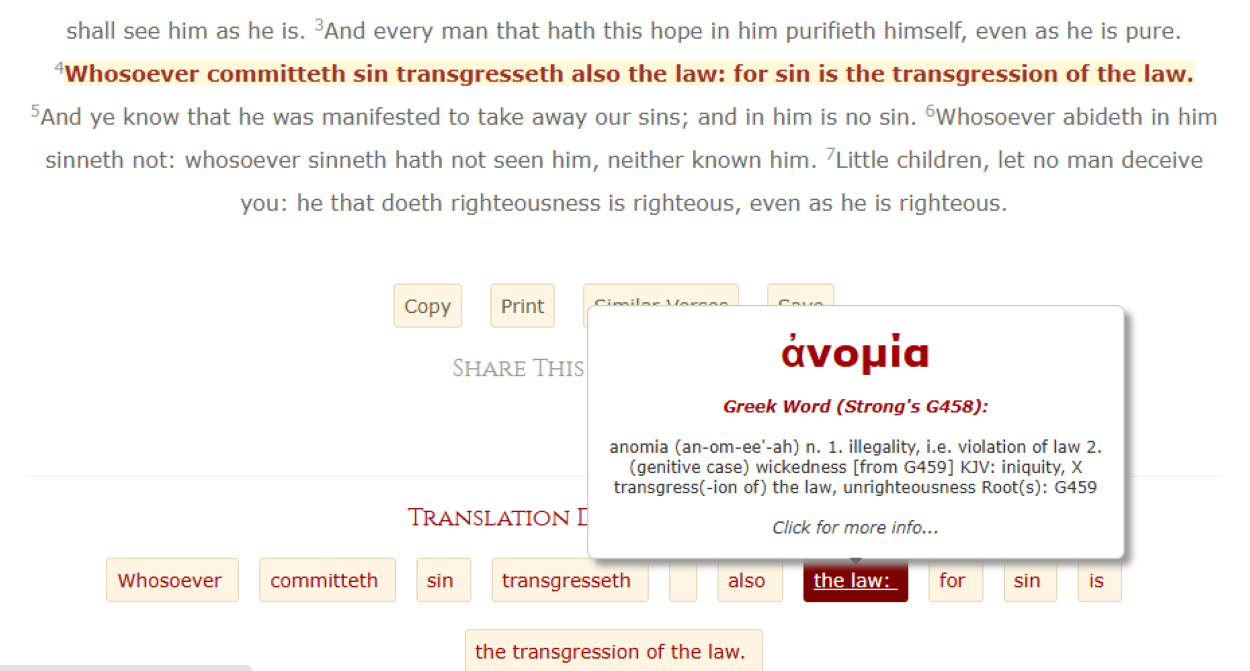
To pervert I John 3:4 they just say that “LAW” is “Torah”. Their entire move is a single substitution:
They take the English word “law” and smuggle Torah into the verse, even though the Greek word is ἀνομία (anomia) — which never means Torah.
ἀνομία — anomia (G458) meaning: “lawlessness, moral rebellion, violation of right order“
This makes any violation of Torah a “sin” for the Believing Gentiles and creates another FALSE GOSPEL. Salvation now depends upon full compliance to all the laws Moses that still apply.

Frequently Asked Questions
What is The Stories Book about?
This exquisite compilation showcases a diverse array of photographs that capture the essence of different eras and cultures, reflecting the unique styles and perspectives of each artist.
How much does The Stories Book cost?
This exquisite compilation showcases a diverse array of photographs that capture the essence of different eras and cultures, reflecting the unique styles and perspectives of each artist.
When will The Stories Book be released?
This exquisite compilation showcases a diverse array of photographs that capture the essence of different eras and cultures, reflecting the unique styles and perspectives of each artist.
Are signed copies available?
This exquisite compilation showcases a diverse array of photographs that capture the essence of different eras and cultures, reflecting the unique styles and perspectives of each artist.
John 20:28 — What Thomas Actually Said in Greek.
In Koine Greek, most nouns lost their ancient Attic vocative forms, but a few older forms survived.
Two key facts matter:
1. “God” (theos) — uses a distinct vocative: thee (θεέ).
2. “Lord” (kyrios) — retains its Attic vocative: kyrie (κύριε).
In John 20:28, Thomas does not use the vocative kyrie.
He uses the nominative forms:
ho kyrios mou — “the Lord of me”
ho theos mou — “the God of me”
The nominative is not the form used for direct address when a vocative exists.
Therefore, Thomas’ words are not directed to Jesus personally.
They function as a doxology—a reverent exclamation to God in heaven—spoken in response to the shock of the resurrection.
This matches normal Jewish speech patterns, where sudden praise is directed upward, not horizontally

What is this?
What is this?
What is this?
What is this?
What is this?
What is this?
What is this?
What is this?
What is this?
Click the “NEXT PAGE BUTTON”, to move on, or the site logo to return to the Home Page