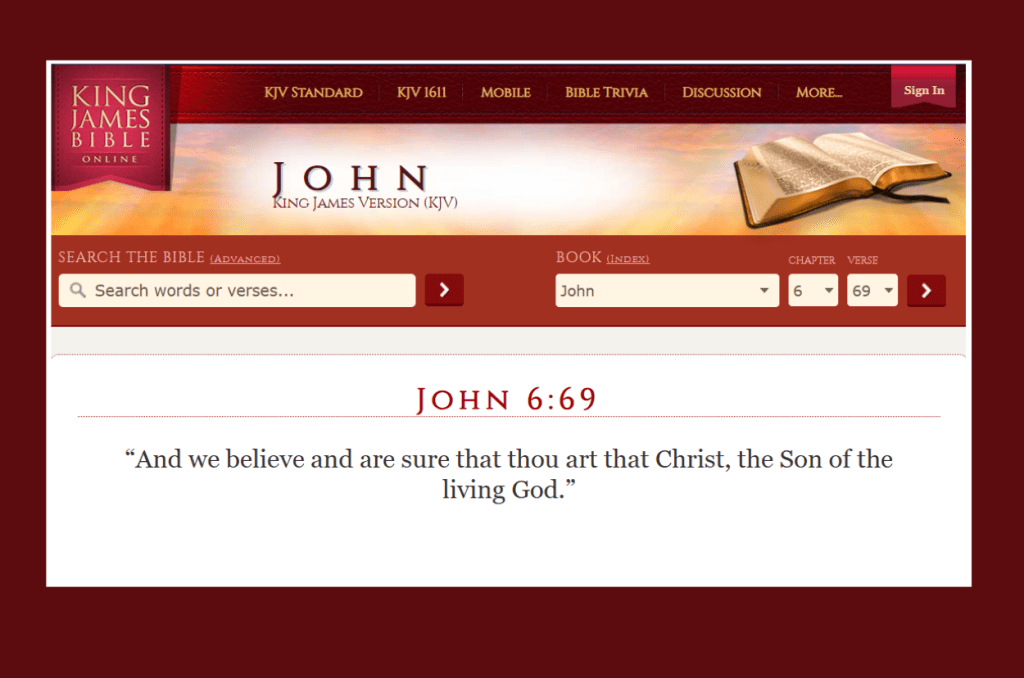
The “context” of everything found within the pages of the New Testament is Judaism. Therefore, look for the explanation in the Old Testament.
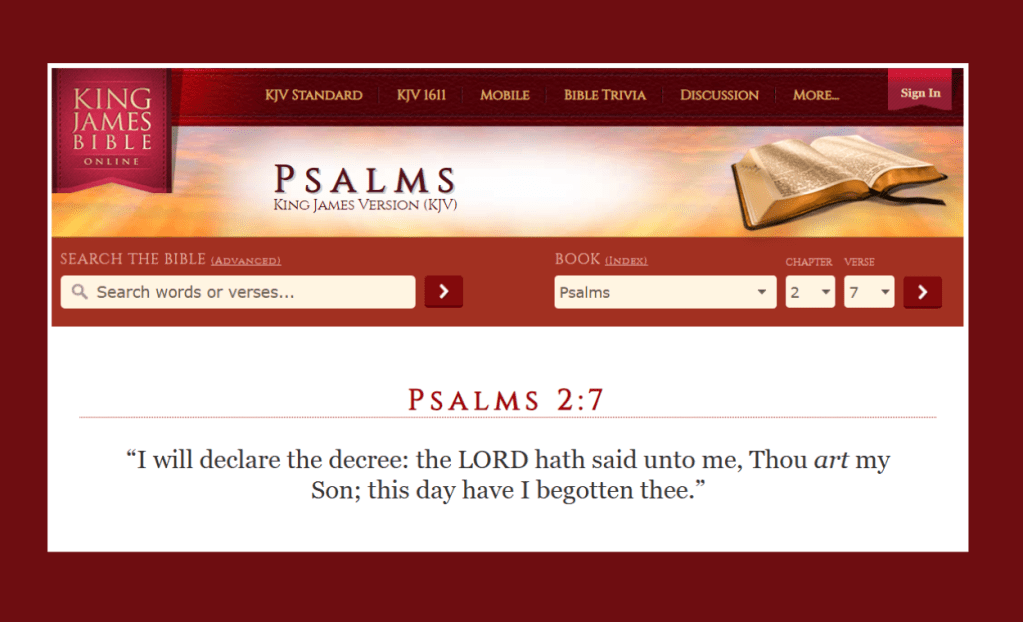
In Psalm 2:7 we find the basis for the disciples being sure that he was “the son of God”.
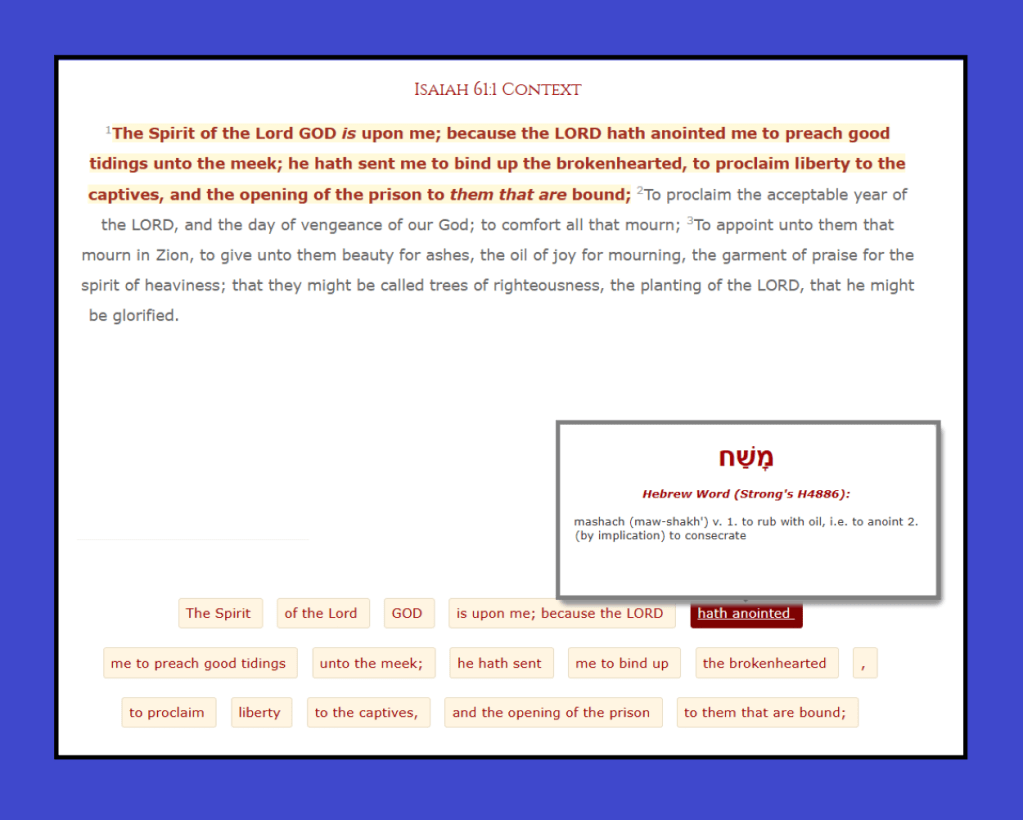
The title of “Christ” is the English word for the Greek translation of the Hebrew title: “Messiah”. There are over 100 really key “Messianic Prophecies”, and Isaiah 61:1 is one of the most important ones.
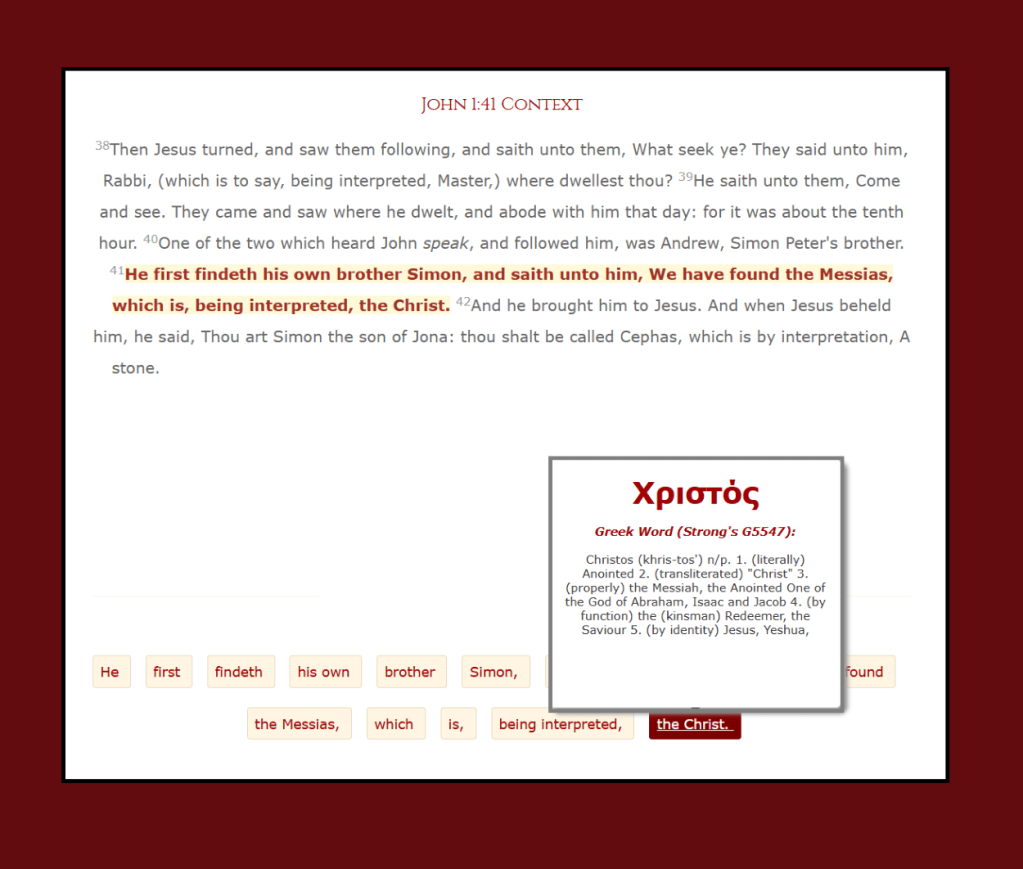
The Hebrew word #4886 “mashach” as a verb can mean “to anoint”. As a noun it can refer to “The Jewish Messiah”. To understand the Greek title, we just need to examine John 1:41.
Our “Lord and Saviour; Jesus Christ” is really “Yeshua the Messiah”. In Hebrew this is what it looks like:
יֵשׁוּעַ הַמָּשִׁיחַ “Yēshuaʿ ha‑Mashiach”
What is the actual English transliteration of our Lord’s Hebrew name if you go directly from Hebrew to English? The Hebrew “Yeshua” would be “Joshua”.
Our English Bibles settled on the name “Jesus” during the Cambridge revision of the KJV in 1629-1638. The 1611 KJV used:
“IE SUS”.
“IE SUS” is the Latin transliteration of the Greek transliteration of his Hebrew name.
To prove this, we will examine “The Greek Septuagint”. Seventy Jewish Scholars in Alexandria, Egypt translated the Hebrew Scriptures into Greek.
🔵 How the Septuagint Shows the Path from Yehoshua → Yeshua → Iēsous → Jesus
🟦 1. The Septuagint (LXX):
The First Bible Translation
- Around 250–150 BCE, Jewish scholars in Alexandria translated the Hebrew Scriptures into Greek.
- This translation is called the Septuagint (abbreviated LXX).
- It became the Bible of the Jewish world outside Israel and the Bible of the early church.
This matters because the Septuagint shows us how Jews themselves translated Hebrew names into Greek long before Christianity existed.
🟦 2. The Hebrew Name יְהוֹשֻׁעַ “Yehoshua”
The Hebrew name of “Joshua son of Nun” is:יְהוֹשֻׁעַ “Yehoshua” — “Yahweh saves.”
Over time, Hebrew speakers shortened it to:יֵשׁוּעַ “Yeshua”
This shortened form appears repeatedly in post‑exilic books (Ezra, Nehemiah).
🟦 3. How the Septuagint Translated “Yehoshua/Yeshua”
When the Jewish translators of the Septuagint rendered the name Yehoshua/Yeshua into Greek, they used: Ἰησοῦς “Iēsous”
This is the exact same Greek name used in the New Testament for Yeshua the Messiah.
📌 Example:
- Joshua son of Nun in the Septuagint = Ἰησοῦς (Iēsous)
- Yeshua the Messiah in the Gospels = Ἰησοῦς (Iēsous)
Same spelling. Same pronunciation. Same Greek name.
This is not a Christian invention — it is Jewish translation practice from the 3rd–2nd century BCE.
🟦 4. How “Iēsous” Became “Jesus”
When Greek was later translated into Latin, “Iē sous” became “Ie sus”
And when English developed the letter “J” (around the 1500s), it became: “Jesus”.
So the chain looks like this:
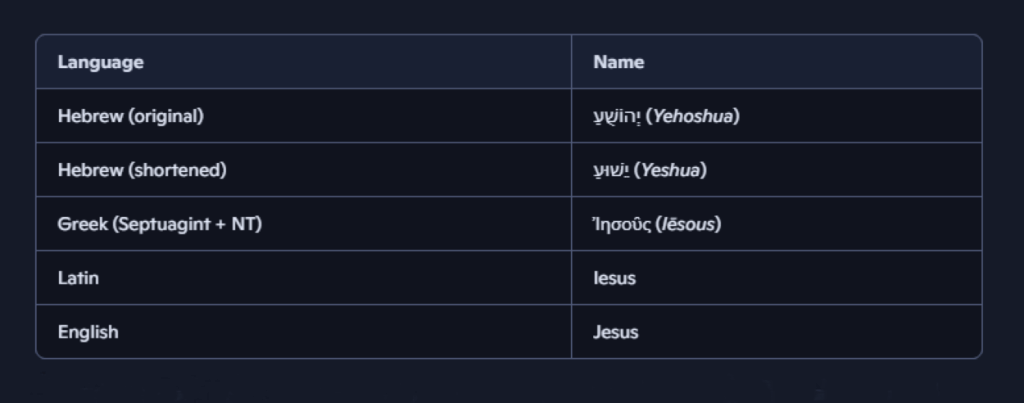
 TruthQuest International LLC; Bible Study Network
Leave a comment