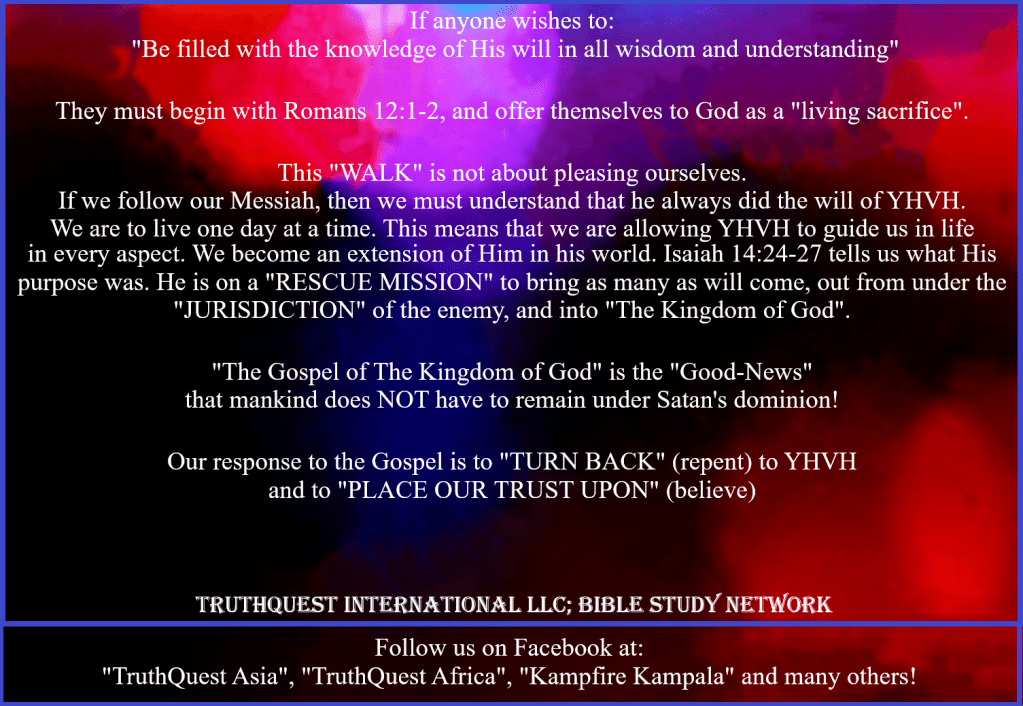
Knowing Scripture is not enough!
Discovering the “will of God” for activities in our everyday lives requires more than “HEAD KNOWLEDGE” of right and wrong. We are called to function within The Kingdom of God, and that requires being Led by His Spirit.
🔍 Ezekiel 36:27 — The Promise of Internal Empowerment
“I will put My Spirit within you and cause you to walk in My statutes, and you will keep My judgments and do them.”
This is not external compliance. It’s divine causation. The Spirit within is the mover—not the letter outside. Ezekiel’s prophecy marks a shift from imposed obedience to Spirit-enabled transformation. This is not a call to obey by grit or ritual. It’s a promise that obedience will be Spirit-driven. The “cause” is internal, not imposed. The “statutes” remain—but the power source changes.
📜 Oldness of Letter — External Law, Powerless Flesh
- Romans 7:6: “We have been released from the law… so that we serve in the newness of the Spirit and not in the oldness of the letter.”
- The “letter” refers to Torah as a written code, which exposes sin but cannot empower righteousness.
- Paul calls it “the ministry of condemnation” (2 Corinthians 3:9), not because the Law is evil, but because it lacks the Spirit to fulfill it.
🌬️ Newness of Spirit — Internal Law, Empowered Life
- Romans 8:4: “The righteous requirement of the law is fulfilled in us who walk… according to the Spirit.”
- Jeremiah 31:33: “I will write My law on their hearts.”
- Galatians 5:18: “If you are led by the Spirit, you are not under the law.”
This is not lawlessness—it’s Spirit-led lawfulness. The Law is fulfilled in us, not by us.
✨ Yeshua’s Fulfillment — From Letter to Spirit
- Matthew 5: He internalizes the Law—anger becomes murder, lust becomes adultery. He raises the standard but supplies the Spirit.
- John 14:17: Promises the Spirit “who will be in you.”
- Luke 4:18: Declares the Spirit upon Him to bring liberty—not legalism.
Yeshua never taught mere compliance. He taught transformation. His resurrection unlocked Ezekiel’s prophecy: the Spirit within, causing obedience.
🧭 Restoration Anchor
This contrast is not optional—it’s the axis of covenantal shift. Serving in newness of Spirit is the only valid post-resurrection mode. The sanctuary grid must reflect this: mnemonic stations must not merely teach doctrine—they must transmit empowerment.
🔗 Anchor #126: “Will of God” + Psalm 126
The most fitting verse to encode this connection is Psalm 126:5:
“Those who sow in tears shall reap in joy.”
This verse embodies the will of God not as abstract decree, but as redemptive process—a divine will that transforms sorrow into harvest. It aligns with Romans 8:27, where the Spirit intercedes “according to the will of God,” often through groanings too deep for words. Psalm 126:5 reveals that God’s will is not static—it’s restorative, seasonal, and covenantal.
🧠 Mnemonic Encoding for Portal #126
- Symbol: A seed falling into cracked soil, watered by tears, sprouting into golden sheaves.
- Anchor Phrase: “Will of God = Pleasing ourselves normally lead to sorrow, but living in the will of God brings “Righteousness, Peace and Joy” (Romans 14:17)
Romans 14:17 is a doctrinal gem worth anchoring:
“For the kingdom of God is not meat and drink; but righteousness, and peace, and joy in the Holy Spirit.”
This verse dismantles ritualistic frameworks and affirms that the will of God is not about external observance (like dietary laws), but about internal fruit—Spirit-born righteousness, peace, and joy.
🔗 Linking to Psalm 126 and Anchor #126
Psalm 126:5 says:
“Those who sow in tears shall reap in joy.”
That joy is not circumstantial—it’s covenantal. Romans 14:17 confirms that joy in the Holy Spirit is a core attribute of the kingdom. So:
- Psalm 126:5 = Joy as harvest after sorrow.
- Romans 14:17 = Joy as evidence of kingdom life.
Together, they encode the will of God as a Spirit-led restoration process, not a ritual system. Anchor #126 now becomes:
“Will of God = Righteousness, Peace, Joy — not ritual, but restoration.”

 TruthQuest International LLC; Bible Study Network
Leave a comment