“COME OUT OF HER…”
What does Rev 18:4 mean?
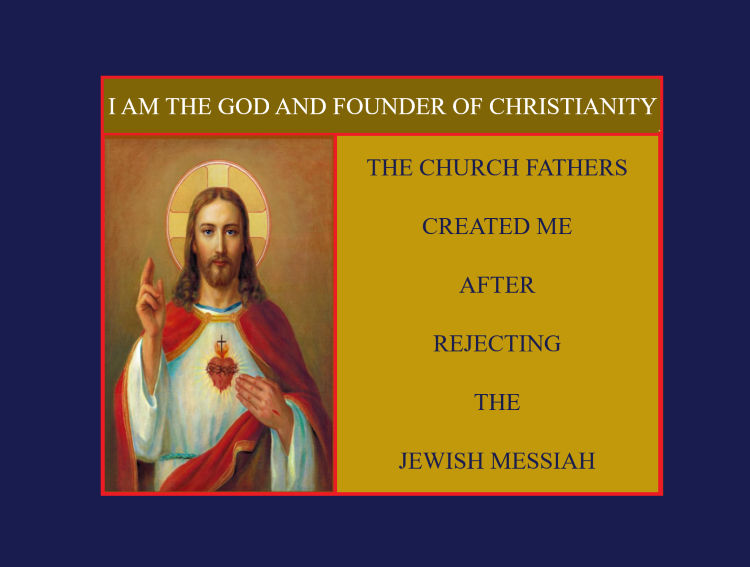
The “Jesus Christ” presented by the Religion of Christianity is not “The Jewish Messiah” who said:
- “I and my Father are one”
- “Search the scriptures…they are they which testify of me.”
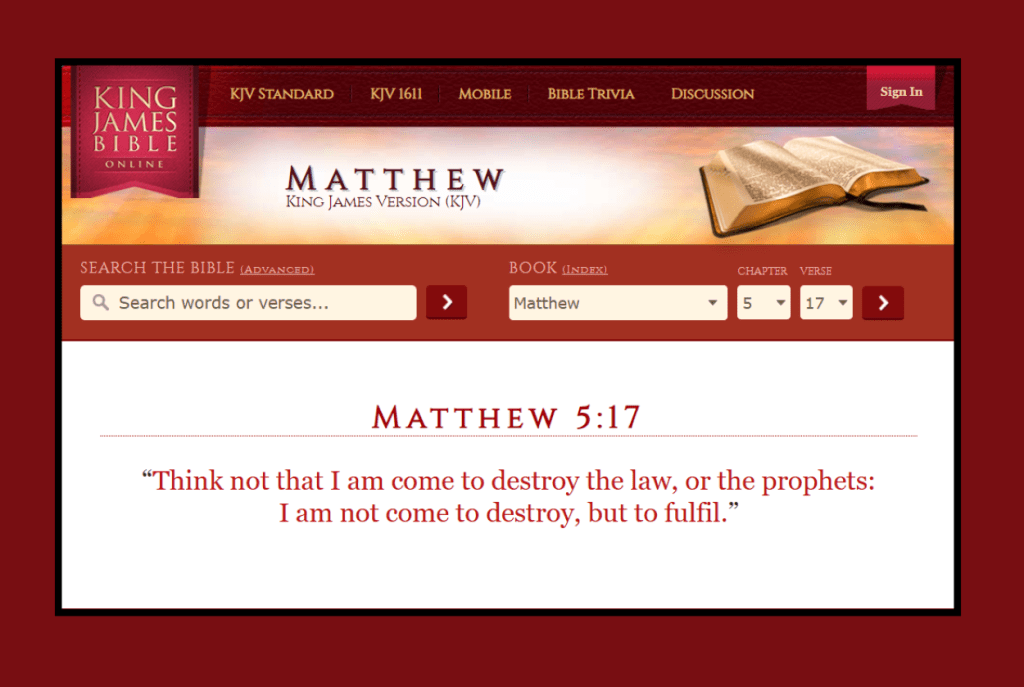
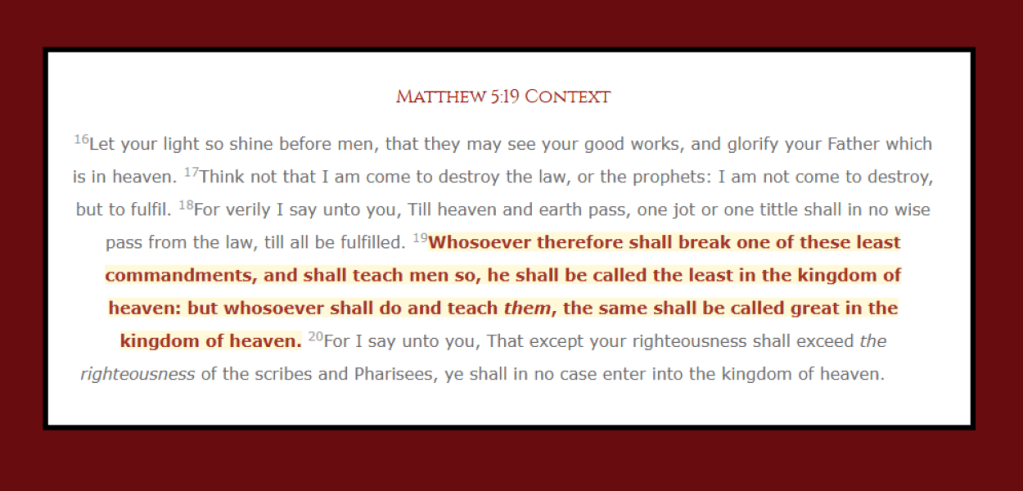
- “…I have not come to destroy (TORAH), but to fulfill.”
- “Sanctify them through thy truth, thy word is truth.”
- “…I will build my EKKLESIA…” (“MY CALLED-OUT-ONES”)
- ” If you continue in my word, then are ye disciples indeed.”
- “I am not sent but unto the lost sheep of the house of Israel”
This warning, drawn from Revelation 18:4—“Come Out of Her, My People”—serves as a doctrinal summons within the TruthQuest framework. It’s not merely a critique of institutional religion; it’s a covenantal call to disengage from what the page identifies as a spiritually adulterous and doctrinally compromised system: the post-Apostolic religion of Christianity.
The Divisions of what this warning is about:
- Replacement Theology “Doctrines & Practices” Paul gives us the truth that Believing Jews are to remain Torah compliant & the Believing Gentiles are not to convert to Judaism.
- When was the Jewish Sabbath changed to Sunday?
- When did Easter replace Passover?
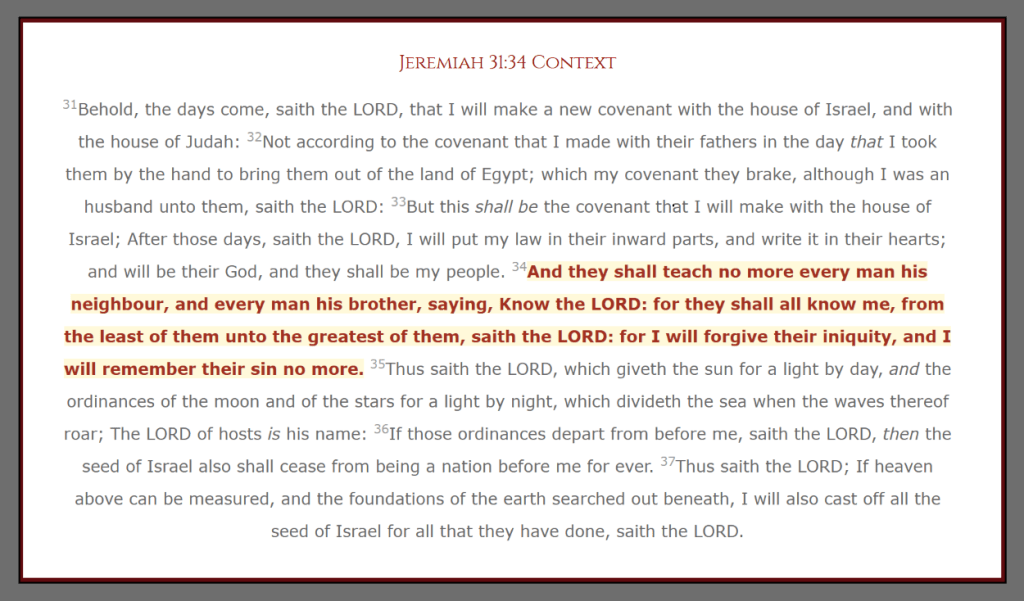
- The three-fold established verses 1. Jer 31:31-34, 2. Dan 2:44 & 3. Isaiah 35:8
- When did the “Trinity Doctrine” become first established as the uniform teaching of “The Church Fathers”
The verses used by the “Replacement Theologians” are next. Below is the clean, impersonal, modular list of the most important historical verses used by the Replacement Theologians (Church Fathers → Schoolmen → Medieval Catholic tradition). These are the core texts they repeatedly cited to justify:
- Israel rejected
- Church = “New Israel”
- Torah abolished
- Covenants transferred
- Jews disinherited
I’ll give you 15 primary verses, each with the exact doctrinal use-case in the Replacement system.
“The kingdom of God will be taken from you and given to a nation producing its fruits.” Use: Master text for “Israel rejected → Church inherits.”
2. Matthew 23:38
“Your house is left to you desolate.” Use: Divine abandonment of Israel.
3. Matthew 27:25
“His blood be on us and on our children.” Use: Perpetual curse on Jews → justification for supersession.
4. John 8:44
“You are of your father the devil.” Use: Jews = spiritually illegitimate → Church = true children.
5. John 1:11
“He came to His own, and His own did not receive Him.” Use: Israel forfeited covenant by rejecting Messiah.
6. Acts 13:46
“Since you reject it… we turn to the Gentiles.” Use: Transfer of covenantal privilege.
7. Romans 2:28–29
“He is a Jew who is one inwardly.” Use: Church = “spiritual Israel.”
8. Romans 9:6–8
“Not all who are descended from Israel belong to Israel.” Use: Redefinition of Israel as the Church.
9. Romans 11:17–22
“Branches broken off… wild branches grafted in.” Use: Israel removed; Gentile Church replaces.
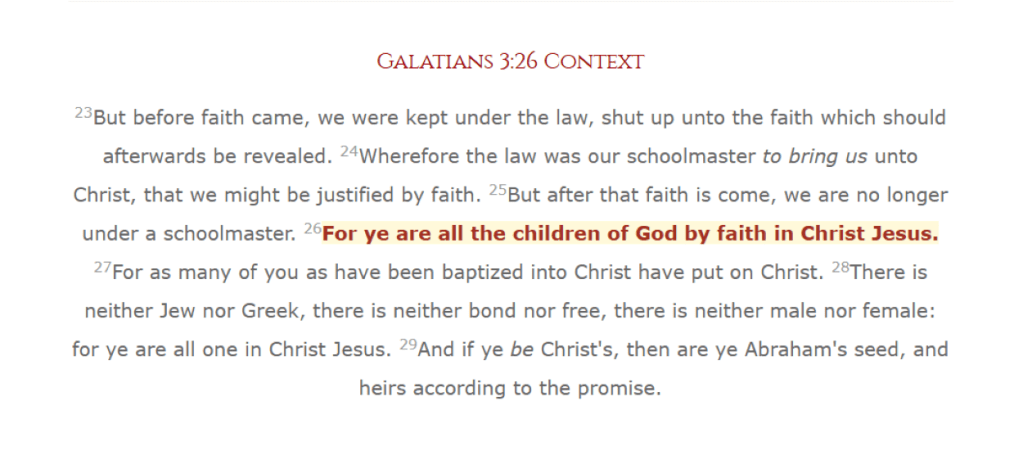
10. Galatians 3:7
“Those of faith are sons of Abraham.” Use: Gentile believers = true Abrahamic heirs.
11. Galatians 6:16
“The Israel of God.” Use: Church = “new Israel.”
12. Ephesians 2:14–16
“He abolished the law of commandments.” Use: Torah ended; Jewish identity dissolved.
13. Philippians 3:3
“We are the circumcision.” Use: Church replaces Jewish covenant identity.
14. 1 Peter 2:9–10
“Once you were not a people, but now you are God’s people.” Use: Gentile Church inherits Israel’s titles (royal priesthood, holy nation).
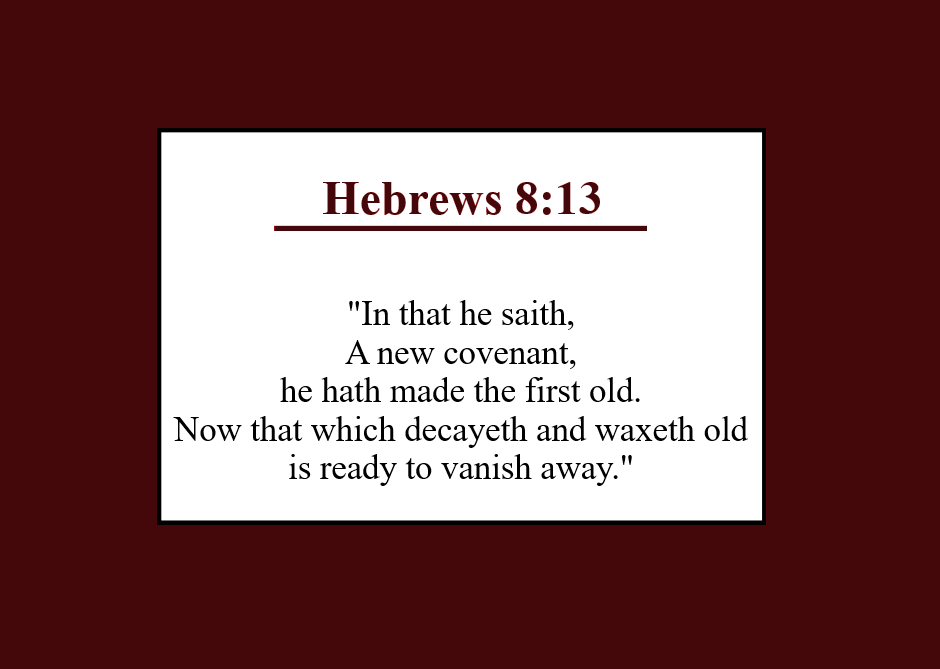
15. Hebrews 8:13
“What is obsolete and aging will soon disappear.” Use: Old Covenant (and Israel’s role) terminated.
Malachi 1:11 – “In every place incense will be offered” (Gentile worship replaces Temple).
Deut 32:21 – “I will make them jealous with a foolish nation.”
Isaiah 65:1–2 – “I was found by those who did not seek Me.”
Jeremiah 31:31 – New covenant interpreted as Gentile-only.
Hosea 1:9–10 – “Not My people → My people.”

1. Ignatius of Antioch (c. 35–110 AD)
Earliest architect of Replacement Theology; first to detach the movement from Torah and from Jewish identity.
Representative Quotes from Ignatius
1. Christianity vs. Judaism (Magnesians 10)
“It is monstrous to talk of Jesus Christ and to practice Judaism.” Use: Torah observance = error; Judaism obsolete.
2. Believers must not live as Jews (Magnesians 8)
“If we still live according to Judaism, we confess that we have not received grace.” Use: Torah obedience = denial of Christ.
3. The Sabbath replaced by the Lord’s Day (Magnesians 9)
“Those who were brought up in the ancient customs have come to the new hope… no longer observing the Sabbath.” Use: Old covenant practices abolished.
4. The bishop replaces Torah authority (Trallians 2)
“Without the bishop, do nothing.” Use: New authority structure replaces Mosaic authority.
5. The synagogue rejected (Philadelphians 6)
“If anyone interprets Judaism to you, do not listen to him.” Use: Jewish teachers and Jewish believers delegitimized.
6. The Church replaces Israel (Philadelphians 3)
“Where Jesus Christ is, there is the Catholic Church.” Use: The Church becomes the new covenant community.
Placement in Your Historical Sequence
Ignatius should appear first, before Justin Martyr, because:
He is the origin point for the later Fathers (Justin, Irenaeus, Tertullian, Origen, etc.)
He dies around 110 AD
His seven letters are the earliest surviving Christian writings after the New Testament
He is the first to articulate a full anti‑Torah, bishop‑centered, Gentile Christianity
2. Justin Martyr (c. 100–165 AD)
Theme: Church = “true Israel”; Jews rejected for unbelief.
Representative quotes:
- “For the true spiritual Israel… are we who have been led to God through this crucified Christ.” (Dialogue with Trypho, 11)
- “The Scriptures are not yours, but ours.” (Dialogue, 29)
- “The seed of Jacob now is Christ and His followers.” (Dialogue, 135)
3. Irenaeus of Lyons (c. 130–202 AD)
Theme: Israel’s promises fulfilled in the Church.
Representative quotes:
- “Those who believe in Him… are the new heirs of the covenant.” (Against Heresies, 4.21.1)
- “The calling of the Gentiles is the true Israel of God.” (paraphrased from Against Heresies, 3.6.1)
- “The former people were rejected… the Church is the continuation of the covenant.” (summary of 4.21–4.23)
4. Tertullian (c. 155–240 AD)
Theme: Jews disinherited; Gentiles inherit.
Representative quotes:
- “The Jews had lost God’s favor… the Gentiles were adopted.” (Against the Jews, 1)
- “The grace of God is transferred to the nations.” (Against the Jews, 13)
- “The ancient people ceased to be the people of God.” (Against Marcion, 5.1)
5. Origen (c. 185–254 AD)
Theme: Allegory → Israel becomes a spiritual symbol; Church = real Israel.
Representative quotes:
- “We say that the Jews will not return to their former condition.” (Against Celsus, 2.8)
- “The Church is the true Israel.” (Homilies on Joshua, 2.1)
- “The literal Israel has been cast off.” (summary of Commentary on Matthew, 27)
6. Cyprian of Carthage (c. 200–258 AD)
Theme: Israel replaced because they rejected Christ.
Representative quotes:
- “We Christians are the true people of God.” (Testimonies, 1.20)
- “The Jews, having forsaken Christ, were themselves forsaken.” (Epistle 63)
- “The Church alone is the spouse of Christ.” (Testimonies, 2.1)
7. Eusebius of Caesarea (c. 260–339 AD)
Theme: History itself proves Israel’s rejection; Church inherits all.
Representative quotes:
- “The Church is the true Israel of God.” (Proof of the Gospel, 1.4)
- “The ancient customs of the Jews have been abolished.” (History of the Church, 1.2)
- “The promises… have been transferred to the Christian people.” (Proof, 1.5)
8. John Chrysostom (c. 349–407 AD)
Theme: Harsh anti‑Jewish rhetoric; Jews cursed; Church replaces.
Representative quotes:
- “The synagogue is not only a whorehouse and a theater… it is also a den of robbers.” (Against the Jews, 1.3)
- “The Jews were driven out by God and replaced.” (Homily on Matthew, 23)
- “The Church has taken the place of their synagogue.” (Against the Jews, 3.6)
9. Augustine of Hippo (354–430 AD)
Theme: Jews preserved only as witnesses; Church = Israel.
Representative quotes:
- “The Church is the true Israel.” (Tractates on John, 6.12)
- “The Jews… are thus by their own Scriptures a testimony to our truth.” (City of God, 18.46)
- “The promises made to Israel are fulfilled in the Christian people.” (Letter 149)
10. Cyril of Alexandria (c. 376–444 AD)
Theme: Israel rejected; Church inherits prophetic blessings.
Representative quotes:
- “The synagogue has become bereft of God.” (Commentary on Isaiah, 1.2)
- “The Church is the new people of God.” (Glaphyra on the Pentateuch, 2.3)
- “The Jews were cast off for their unbelief.” (Commentary on John, 1.9)
11. Thomas Aquinas (1225–1274 AD)
Theme: Scholastic systematization of supersession; Old Law abolished.
Representative quotes:
- “The ceremonial precepts of the Old Law are dead and deadly.” (Summa Theologica, I–II, Q.103, Art.4)
- “The New Law is the law of the Spirit… the Old Law is abolished.” (I–II, Q.106, Art.1)
- “The Church is the heir of the promises.” (Commentary on Galatians 6:16)
1. “Come Out of Her” as a Legal Exodus
- The phrase is used as a covenantal directive, not poetic metaphor.
- “Her” refers to the institutional religion of Christianity, which the page frames as a man-made hybrid—not a continuation of the Apostolic witness or Torah fidelity.
2. Christianity as a Post-Apostolic Invention
- The page asserts that Christianity was not founded by the Jewish Messiah, but by Gentile leaders who detached themselves from Paul’s teachings.
- The first such figure is Ignatius of Antioch (d. 107 A.D.), followed by Roman consolidation at Nicaea (326 A.D.) and imperial enforcement in 380 A.D..
- These events mark the rupture point—where covenantal truth was replaced by ecclesiastical control.
3. Spiritual Adultery and Doctrinal Compromise
- Christianity is described as spiritually adulterous, meaning it has broken covenant with YHVH by embracing foreign doctrines.
- It is doctrinally compromised through its reliance on:
- Roman politics (imperial enforcement of belief),
- Greek philosophy (abstract theology like Trinity and Original Sin),
- Ecclesiastical hierarchy (bishops, councils, and creeds).
- These elements are seen as replacements for Paul’s original teachings to Gentiles, which were meant to stand alone and unaltered.
4. Restoration Framework Response
- The page calls for a dual restoration:
- Jewish believers must remain Torah-compliant.
- Gentile believers must accept Paul as their sole doctrinal authority.
- Christianity, as shaped by the Church Fathers, is rejected as a post-Apostolic distortion.
This text is a doctrinal firewall. It declares that Christianity, was institutionalized after the Apostles, and is a hybrid system that must be exited. The sanctuary framework offers a structured path out—restoring covenantal fidelity, mnemonic clarity, and Apostolic purity.