🏛️ The First Eight Church Councils
Each council attempted to define orthodoxy amid theological chaos, but they also embedded imperial control and Greco-Roman categories into the faith.
These councils serve as doctrinal fault lines that exposes the shift away from the Hebraic foundation.
1. Council of Nicaea (325 AD)
This council confronted Arianism, which denied that Jesus was truly divine. The outcome was a declaration that Jesus is of the same essence as the Father—fully divine.
2. Council of Constantinople (381 AD)
This council clarified the divinity of the Holy Spirit and expanded the Nicene Creed. It reinforced the full Trinitarian formula.
3. Council of Ephesus (431 AD)
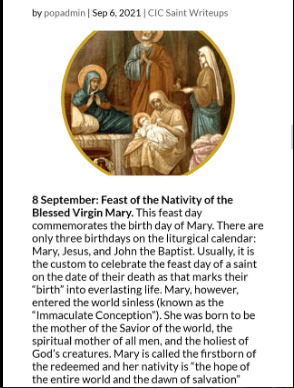
This council rejected Nestorianism, which split Jesus into two separate persons. It affirmed that Jesus is one person and declared Mary as Theotokos—God-bearer.
4. Council of Chalcedon (451 AD)
This council responded to Eutychianism, which blurred the distinction between Jesus’ divine and human natures. It defined Jesus as one person with two distinct natures—fully divine and fully human.
5. Second Council of Constantinople (553 AD)
This council condemned writings that undermined the Chalcedonian definition. It reinforced the unity of Christ’s person and clarified lingering Nestorian ideas.
6. Third Council of Constantinople (680–681 AD)
This council addressed Monothelitism, which claimed Jesus had only one will. It affirmed that Jesus has two wills—divine and human—in one unified person.
7. Second Council of Nicaea (787 AD)
This council dealt with iconoclasm, the rejection of sacred images. It approved the veneration of icons, distinguishing it from worship, which belongs to God alone.
8. Fourth Council of Constantinople (869–870 AD)
This council was politically charged, involving the deposition of Patriarch Photius. It reinforced papal primacy, though this was later contested and contributed to the East-West schism.
Each council represents a doctrinal pivot away from Hebraic categories and toward Greco-Roman metaphysics and imperial control. For your sanctuary grid, these serve as rupture markers—use them to contrast restoration clarity with historical distortion.
 TruthQuest International LLC; Bible Study Network