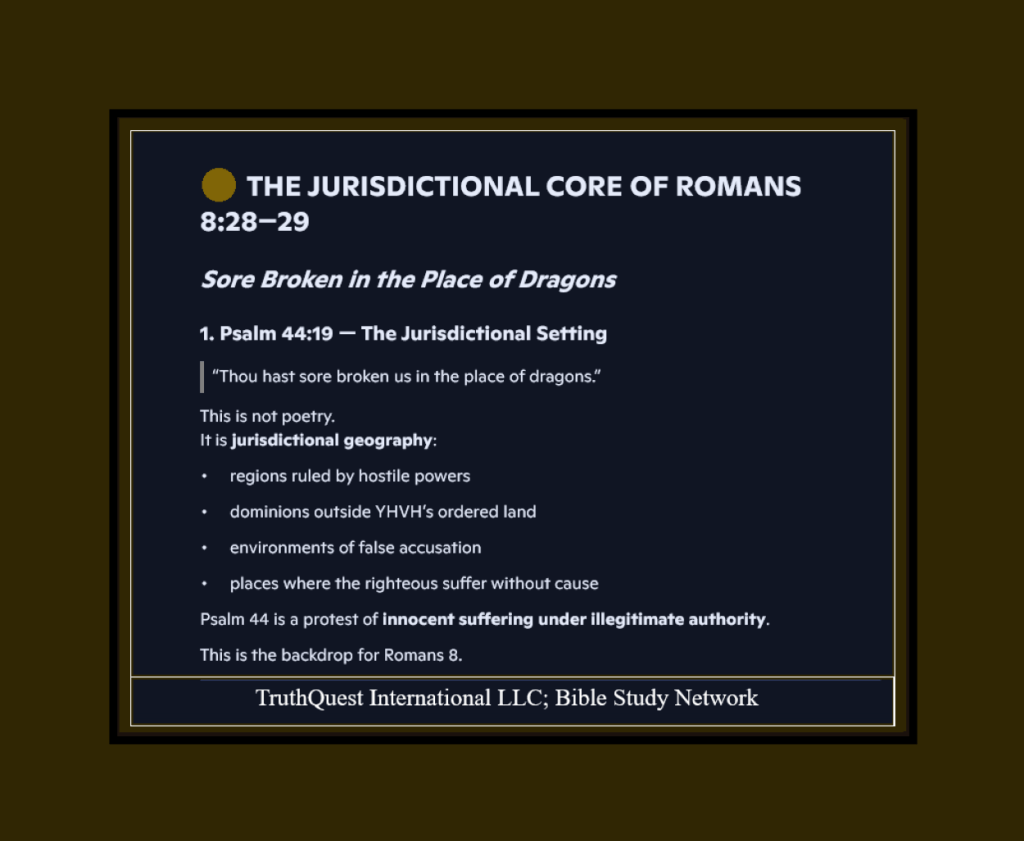
Sore Broken In the Place of Dragons
Is an attempt to understand Romans 8:28-29 through the lense of Ephesians 6:11-17. “Human Tragedy” can indeed become a spiritual win.
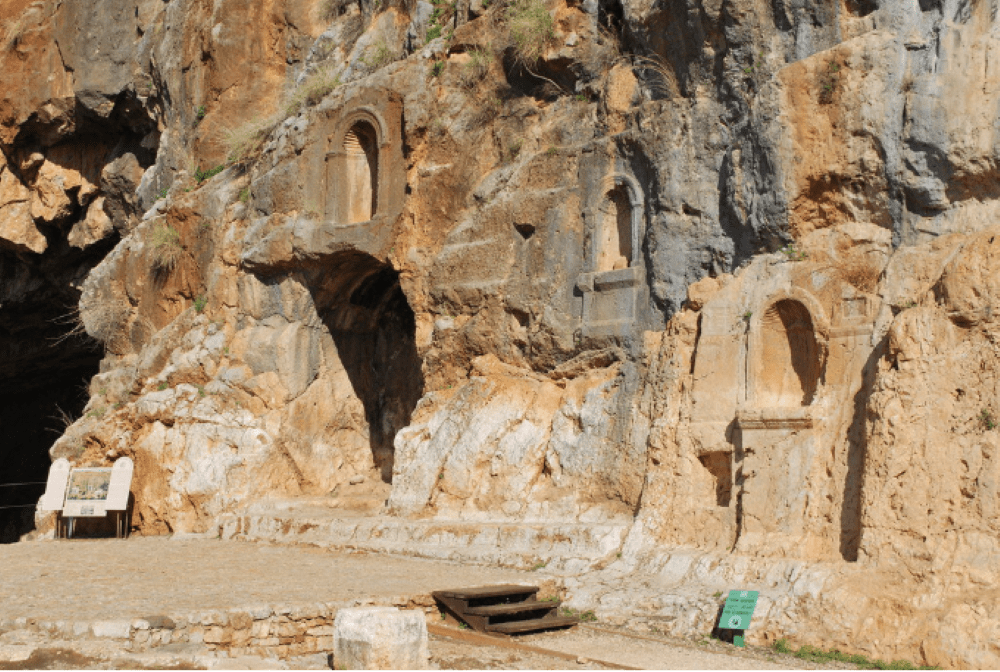
The “Gates of Hell” image was a Pagan Worship Site, considered to be the entrance to the underworld.
This is the face of Mount Hermon where:
“The Gates of Hell”
are located in The Golan Heights.
About This Teaching
Our suffering may stem from the Darkside, as we seen clearly in the Book of Job. But in most cases, it comes from people, either by accident or by purposeful harmful intent. Sometimes we caused it ourselves.
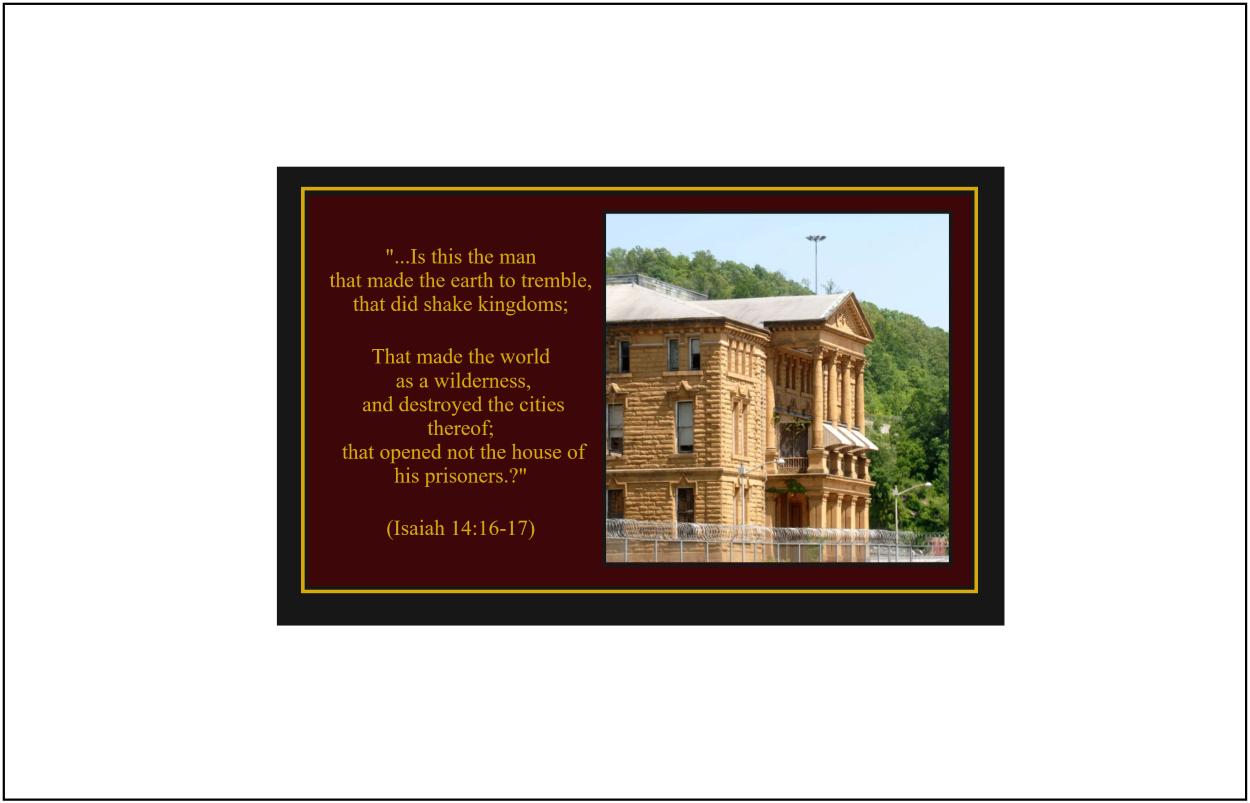
It is important to understand that there are only two group of people in this world. Those under the jurisdiction of Satan, as seen in the image on the right, and those who have “Repented & Believed” after hearing “The Gospel of the Kingdom of God”.
Romans 8: 28-29 is written to those under the jurisdiction of Messiah, but God sometimes uses suffering to “Call-Out” the lost from Satan’s jurisdiction.
Frequently Asked Questions
Why did God do this to me?
He Didn’t! But He will use it for His purposes in your life.
Why does God seem to want me to live in the moment?
Because living in either the past or future will destroy today!
Am I to forgive those who hurt me?
We are under “The Jurisdiction” of Messiah and he instructs us to forgive even those who are not sorry?
____________________________________________
Romans 8:28–29 establishes the jurisdictional pattern through which YHVH overrides hostile dominions.
The “all things” are not good in themselves; they are the raw materials YHVH repurposes.
The “good” is the outcome He produces, not the experience endured.
This pattern mirrors Psalm 44, where the righteous suffer without cause.
The “place of dragons” represents illegitimate authority structures.
These are regions where false accusations shape identity and environment.
The righteous protest, not because they abandoned YHVH, but because they remained faithful.
Romans 8 interprets this suffering as part of a larger legal process.
YHVH uses hostile jurisdictions to expose their limits and reveal His sovereignty.
Romans 8:29 explains the purpose of the override: conformity to the image of the Son.
This is not deity, perfection, or sinlessness — it is pattern.
Messiah endured false accusation, betrayal, mockery, and unjust jurisdiction.
His path becomes the template for understanding righteous suffering.
Our experiences are the shadow‑patterns of His legal victory.
Ephesians 6 identifies the hostile powers behind these jurisdictions.
These are the “dragons” of Psalm 44 — rulers of darkness in high places.
YHVH uses these conflicts to illuminate the real human Messiah.
The Last Adam framework explains how dominion is reclaimed.
This is the structural meaning of “Sore Broken in the Place of Dragons.”
This is the foundation of the Jurisdictional Paradigm.
The Jurisdictional Paradigm explains suffering as a legal conflict, not a moral failure.
Hostile dominions act on false narratives, assigning identities YHVH did not give.
Psalm 44 demonstrates that the righteous can suffer without abandoning covenant.
Romans 8 interprets this suffering as part of YHVH’s predetermined purpose.
The “good” is the revelation produced, not the events themselves.
The “purpose” is conformity to Messiah’s jurisdictional pattern.
Messiah entered hostile dominion voluntarily to reclaim Adam’s forfeited authority.
His suffering was the legal pathway to receiving dominion in Daniel 7.
Paul teaches that believers participate in this pattern through endurance.
This endurance exposes the limits of hostile jurisdictions.
Ephesians 6 identifies these jurisdictions as structured powers, not random forces.
These powers operate through accusation, deception, and identity distortion.
The believer’s stability comes from recognizing the legal nature of the conflict.
Romans 8:28–29 reveals that YHVH uses these conflicts to illuminate truth.
The illumination centers on the real human Messiah, the Last Adam.
His obedience reversed the legal consequences of Adam’s disobedience.
His exaltation established the Kingdom of God foretold in Daniel 2:44.
Believers are translated into this Kingdom through faith, not Torah observance.
This translation removes them from the authority of darkness (Colossians 1:13).
This is the structural meaning of suffering “in the place of dragons.”
It is participation in the New Covenant realities established by Messiah.
These realities include adoption, inheritance, and shared dominion.
Romans 8 frames suffering as the training ground for these realities.
The “good” produced is alignment with Messiah’s jurisdictional authority.
This alignment is the true meaning of being “conformed to His image.”
The image of Messiah in Romans 8:29 is the image of the obedient Last Adam.
This image is defined by submission to YHVH’s purpose under hostile conditions.
Hostile conditions reveal the contrast between true and false jurisdictions.
False jurisdictions operate through intimidation, accusation, and distortion.
True jurisdiction operates through truth, obedience, and endurance.
Romans 8 presents suffering as the arena where these jurisdictions collide.
The believer learns to identify which authority is speaking in each moment.
This discernment is central to spiritual maturity in Paul’s framework.
The Spirit testifies to the believer’s adoption and inheritance.
This testimony contradicts the accusations of hostile powers.
The accusations attempt to redefine the believer’s identity and destiny.
Romans 8:33–34 declares that no charge can stand against YHVH’s elect.
This legal declaration nullifies the authority of hostile accusations.
The believer’s confidence rests in YHVH’s verdict, not human opinion.
This verdict is grounded in Messiah’s obedience as the Last Adam.
His obedience established the legal foundation for the New Covenant.
The New Covenant transfers believers into Messiah’s jurisdiction.
This transfer is the meaning of being “delivered from the power of darkness.”
The power of darkness is the collective authority of hostile dominions.
Romans 8:28–29 explains how YHVH uses these dominions to reveal His purpose.
____________________________________________
Is there any benefit to forgiving everyone?
The greatest gift YHVH gives us is His Direct Divine Revelation, and our refusal to forgive acts to block His Voice.
____________________________________________
The Kingdom of God operates through the authority of the Last Adam, not the first.
Adam’s failure transferred jurisdiction to the adversary through disobedience.
Messiah’s obedience reversed this transfer and reclaimed the dominion.
Romans 8 explains how believers participate in this restored jurisdiction.
Participation occurs through alignment with Messiah’s pattern, not Torah.
The purpose of suffering in Romans 8 is jurisdictional transformation, not punishment.
Transformation occurs when false authorities are exposed as powerless.
The believer learns that accusations have no legal standing before YHVH.
Romans 8:31–32 frames this as the logic of divine commitment.
If YHVH did not spare His own Son, He will not abandon His elect.
This assurance dismantles the intimidation strategies of hostile powers.
Hostile powers rely on fear to maintain their jurisdictional influence.
The Spirit replaces fear with the witness of adoption and inheritance.
This witness is the internal evidence of the New Covenant reality.
The New Covenant establishes direct access to YHVH through Messiah.
This access bypasses all hostile jurisdictions and their accusations.
Romans 8:35–36 lists the pressures used by hostile dominions.
These pressures include tribulation, distress, persecution, and danger.
Paul identifies them as attempts to separate believers from Messiah’s love.
This love is not emotional; it is covenantal and jurisdictional.
It is the legal bond established by Messiah’s obedience as the Last Adam.
Romans 8:37 declares that believers are “more than conquerors.”
This conquest is not military but jurisdictional in nature.
It is the triumph of YHVH’s decree over hostile dominions.
This decree secures the believer’s identity, destiny, and inheritance.
The Spirit leads believers into the realities Messiah established.
This leading removes them from the authority of darkness.
The authority of darkness functions through accusation and deception.
These accusations form the “dragons” of Psalm 44 in jurisdictional terms.
They attempt to redefine identity contrary to YHVH’s decree.
Romans 8:28–29 reveals that YHVH uses these pressures to refine identity.
Identity is clarified when false jurisdictions are exposed as powerless.
The believer learns to distinguish between hostile voices and the Spirit’s leading.
This distinction is central to walking in the Spirit, as Paul commands.
Walking in the Spirit is the opposite of coming under Torah.
Click the link below to return to our Home Page
 TruthQuest International LLC; Bible Study Network