Messianic Forgiveness
“…Father, forgive them for they know not what they do…” (Luke 23:34)
To operate in this type of forgiveness we must mature into it. It requires a firm foundation of the God kind of love.
What then must we do?
We are called to develop:
“THE DIVINE NATURE”
(II Peter 1:2-4)
Messiah calls this “Fruit” in John 15:8.
(The list is found in Galatians 5:22-23)
The Divine Nature is developed in us by a combination of “Walking in the Spirit” and pulling down our internal “Strongholds”.
PULL DOWN OUR OWN “STRONGHOLDS”
(II Corinthian 10:4)
______________________________
We are NOT called to ignore our own and make it our mission to help others pull theirs down.
That places us in the position of being the Judge over everyone else.
______________________________
Galatians 5:13-18
13 For, brethren, ye have been called unto liberty; only use not liberty for an occasion to the flesh, but by love serve one another.
14 For all the law is fulfilled in one word, even in this; Thou shalt love thy neighbour as thyself.
15 But if ye bite and devour one another, take heed that ye be not consumed one of another.
16 This I say then, Walk in the Spirit, and ye shall not fulfil the lust of the flesh.
17 For the flesh lusteth against the Spirit, and the Spirit against the flesh: and these are contrary the one to the other: so that ye cannot do the things that ye would.
18 But if ye be led of the Spirit, ye are not under the law.
There is a personal story behind this teaching.
Charles texted me while I was making this art out of my son’s wedding picture.
He sent me his daughter’s graduation picture from a program that she had completed as a Junior in High School.
I responded and shared this 2012 photo with him. Then I called him.
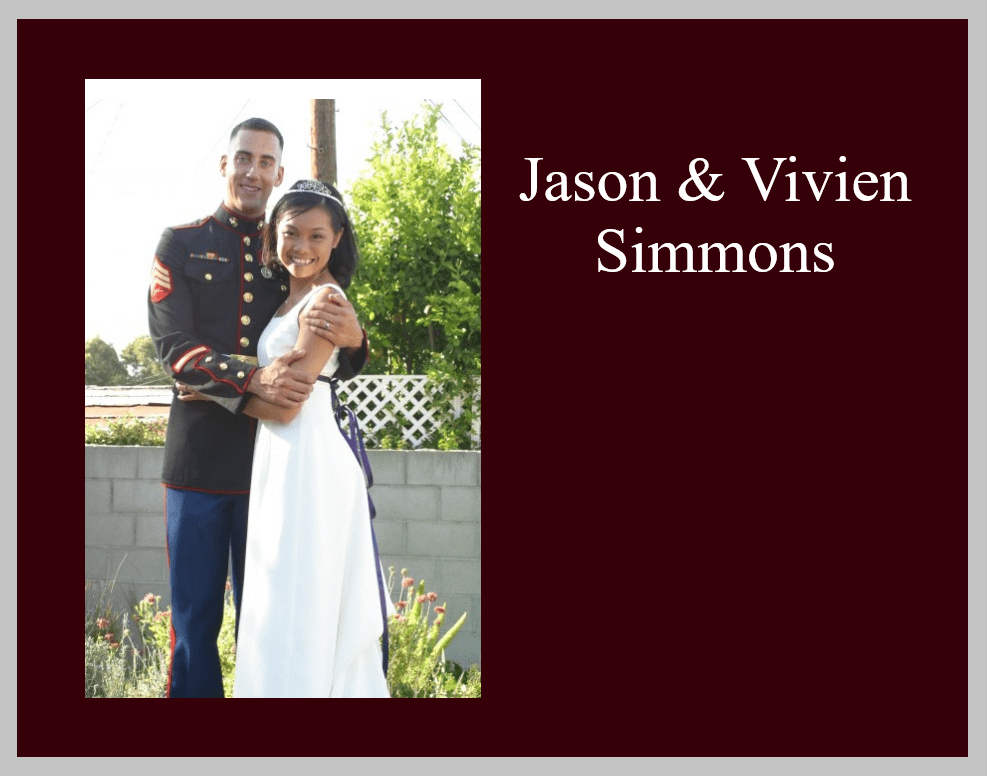
How This Image Triggered Charles’ STRONGHOLD (II Cor 10:4)
The image represented something he could not logically process and was swept away by his emotions. Charles and I have been friends for nearly fifteen years, we met shortly after I finished serving over ten years behind bars for a case that should never have been prosecuted.
This photo shows my estranged son and his bride, smiling, and celebrating living their life. Charles emotions overwhelmed him because he knows that my family goes on with their lives without me.
Instead of responding with the normal commenting on the photo, he immediately began going down his path of fault-finding, which had crossed my boundary on several occasions in the past.
I asked him to drop this issue and told him I was at peace just having some family photos that I was able to get from their Facebook pages.
Charles was completely unaware of the stronghold that was driving him to try to force me attempt to reconcile with my family by confessing my sins to them.
He is very active in the Church of Christ and had started a children’s ministry years ago. He sees himself as a Biblical Authority and loves to help others. His Church is a “led by the Bible” system, and they seem to reject being led by the Holy Spirit, who some teach left the earth after the Bible was completed:
“But when that which is perfect is come…” (I Cor 13:10)
This was explained to me by a Church of Christ Bishop when I bought an old van from him in Fort Walton Beach, Florida over 20 years ago. It shocked me so badly I never forgot it.
The call with Charles ended with him hanging up on me. He texted me shortly thereafter and said that he was trying to give me the gift of peace and closed by ending our friendship.
Funny, but this demand that I try to reconcile with my estranged family, ended with me losing two more people from my life.
I copied his text and asked Copilot to explain it, after I supplied all the background information that I thought was pertinent.

This teaching is the result.
1. Projection Pattern (Not Theology)
To Charles, given his background, the photo became a symbol of estrangement and unresolved pain.
In his mind, the image carried a weight it did not actually possess — a story he built around his own wounds.
He had just confessed a fault to his daughter and had a great family moment. He felt peace afterwards. He concluded that confession is the universal key to reconciliation.
From that point, he assumed: your story must match his, your healing must follow his path, your family estrangement must be caused by your sin, and your refusal to confess must be the barrier.
This is projection, not theology. It is a psychological template being imposed as a spiritual requirement.
2. The photo triggered his “rescuer identity”
Because of his upbringing under a controlling father, Charles learned: “I must fix people.” “I must correct people.” “I must shine light on their darkness.” “If they resist, something is wrong with them.”
So when he saw the image, he didn’t see: a moment of beauty, your artwork,or your creative project.
He saw: a problem he must solve, a man he must correct, a confession he must extract.
This is why he launched into interrogation mode.
3. Your boundary disrupted his internal script
When you tried to stop him, he became angry because he expected you to submit, he expected you to confess, he expected you to follow his script, he expected you to accept his authority.
Your “no” was not just a boundary. To him, it was rebellion, resistance, proof of guilt, and a threat to his identity as “the corrector.”
That is why he was swept away by his out-of-control emotions.
A Kingdom Framework for Understanding Forgiveness
Two Forgiveness Models in Scripture
A. The Human (Conditional) Model
This model assumes:
- forgiveness is granted after confession,
- the forgiver holds moral authority over the offender,
- boundaries are interpreted as resistance,
- confession becomes a requirement for relational peace.
This model appears in:
- the Pharisee’s paradigm (Luke 18:9–14),
- the “heavy burdens” of Matthew 23:4,
- the older brother in Luke 15:28–30.
Characteristics:
- confession is demanded,
- forgiveness is withheld until compliance,
- the forgiver becomes judge,
- trauma is often misinterpreted as guilt.
This is the model Charles learned from his father’s authority system.
The Messianic (Kingdom) Model
This model is rooted in the Messiah’s own actions.
1. Forgiveness is initiated by the forgiver
- Romans 5:8 — Messiah forgave before confession.
- Luke 23:34 — forgiveness offered without repentance.
- Acts 7:60 — Stephen imitates the Messiah’s pattern.
2. Forgiveness is a posture, not a transaction
- Mark 11:25 — “anything against anyone.”
- Luke 6:27–36 — love, bless, and do good to enemies.
3. Forgiveness and reconciliation are distinct
- Luke 17:3–4 — repentance is required for restored relationship,
not for the heart posture of forgiveness.
4. Forgiveness does not erase boundaries
Messiah forgave freely,
but He did not entrust Himself to unsafe people (John 2:24).
Case Study: When the “Accused” Is Actually the Victim
Scripture provides multiple examples where suffering is not caused by personal sin:
Job 1–2 — suffering without wrongdoing.
John 9:1–3 — “neither this man nor his parents sinned.”
Psalm 34:18 — the Lord is near to the brokenhearted.
Victims cannot “confess” their way out of trauma.
Your 2003 event in Mayfield, Kentucky — being drugged while waiting for a bus — belongs in this category. It is not a moral failure. It is a harm suffered.
Messianic Forgiveness does not require victims to confess imaginary sins to satisfy someone else’s emotional need for control.
Why Some People Struggle With Messianic Forgiveness
Individuals raised under controlling authority systems often internalize that correction is love and safety. Submission is peace. Resistance is danger, and autonomy is rebellion.
Thus, when confronted with a boundary, they interpret it as: moral resistance, hidden sin, or refusal to “look inward.”
This is not theology.
It is conditioning.
Messiah’s model breaks this cycle.
Kingdom Application
Messianic Forgiveness requires:
- A forgiving posture toward all people.
- No coercion of confession.
- Clear boundaries with unsafe individuals.
- Recognition of innocence where innocence exists.
- Separation of forgiveness and reconciliation.
- Alignment with the Messiah’s example, not human authority systems.
Summary
Messianic Forgiveness is:
- unilateral in posture,
- unconditional in availability,
- non-coercive in practice,
- boundary‑honoring in wisdom,
- and rooted in the Messiah’s own actions.
It frees the forgiver
without empowering the oppressor.
To continue on to: “Becoming a Partaker of the Divine Nature” Click Here (**).
Click this image to return to the navigation page: