Founded by The Apostle Andrew
CITY: BYZANTIUM → CONSTANTINOPLE → ISTANBUL
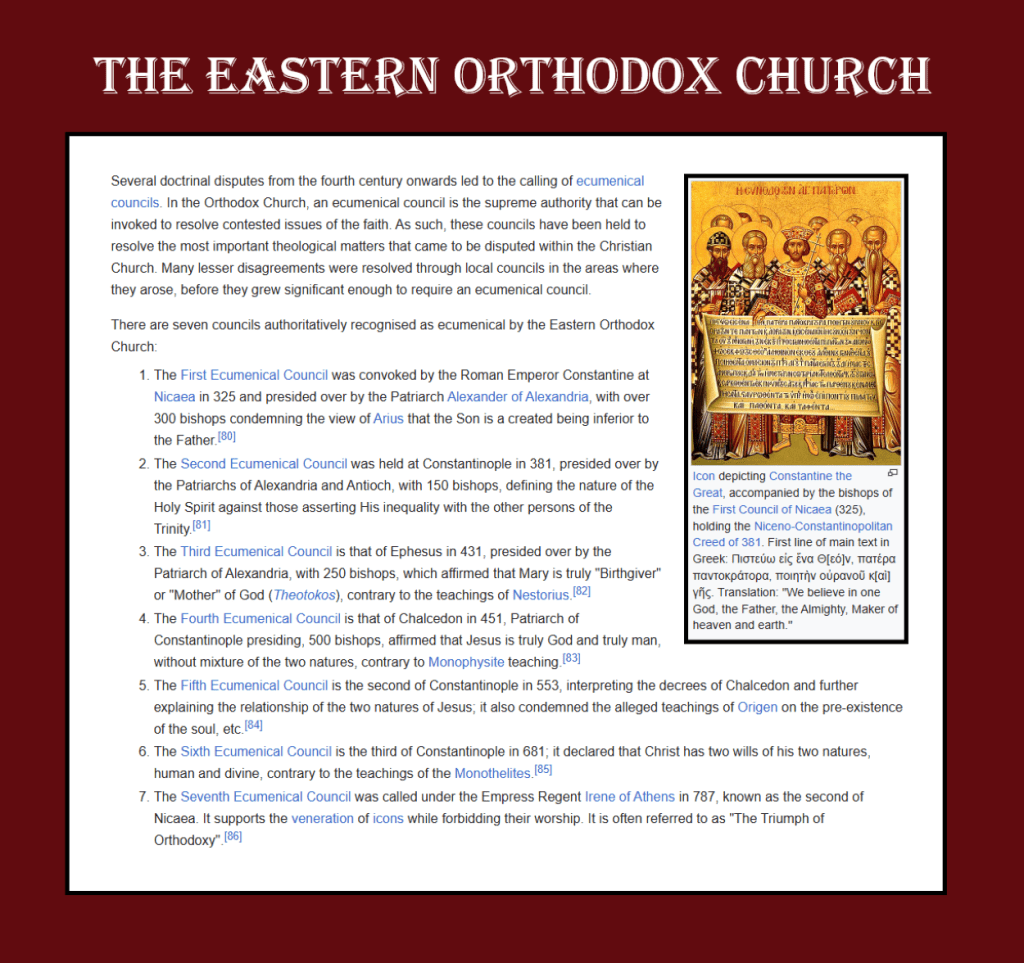
The Eastern Orthodox Church accepts all seven “Church Councils”. They teach that they are “The True Church” that Jesus founded in Matthew 16:18 because the Apostle Andrew personally evangelized the region around ancient Byzantium. According to their tradition, Andrew ordained the first bishop of the city, establishing the apostolic foundation of what later became the Patriarchate of Constantinople.
This claim is central to the identity of the Eastern Orthodox Church, especially in its understanding of the “Apostolic Sees.”
HOW THE EASTERN ORTHODOX CHURCH TRACES ITS APOSTOLICITY TO ANDREW
- Andrew preached in the region of Thrace, which included Byzantium.
- Andrew ordained Stachys as the first bishop of Byzantium.
- When Emperor Constantine moved the capital from Rome to Byzantium (renaming it Constantinople), the existing Andrew‑rooted bishopric was elevated to patriarchal status.
- The Eastern Orthodox Church views this as a continuation of the apostolic line established by Andrew.
Thus, the Eastern Orthodox Church claims direct apostolic succession from Andrew through the bishops and patriarchs of Constantinople.
THE GREAT SCHISM
The Eastern Orthodox Church teaches that the unity of the early Church eventually broke down, leading to a permanent division between Constantinople (East) and Rome (West) in the year 1054 A.D. This event is known as The Great Schism.
WHY THE SPLIT HAPPENED
1. Disagreement over Authority
Rome taught that the Bishop of Rome (the Pope) held universal jurisdiction over all Christians. Constantinople taught that all five ancient patriarchates were equal, with Rome holding only a primacy of honor, not authority.
This was the core issue.
2. The Filioque Controversy
The Western Church added the phrase “and the Son” (Filioque) to the Nicene Creed’s statement about the Holy Spirit. The Eastern Church rejected this addition because: – It was added without an ecumenical council, and – It altered the original creed of 381.
3. Cultural and Political Tensions
– The Eastern Church used Greek; the Western Church used Latin. – The Roman Empire had split into East and West centuries earlier. – Different customs and liturgical practices grew over time.
4. The Mutual Excommunications of 1054
In 1054, papal legates from Rome and the Patriarch of Constantinople excommunicated each other, formalizing the division.
Although attempts at reconciliation were made later, the split became permanent.
HOW THIS RELATES TO CONSTANTINOPLE’S APOSTOLIC CLAIM
The Eastern Orthodox Church teaches that: – The See of Constantinople remained faithful to the original apostolic tradition handed down from Andrew. – Rome, in their view, introduced innovations (papal supremacy, Filioque). – Therefore, the Eastern Orthodox Church sees itself as preserving the unchanged apostolic faith of the early Church.
This is why they continue to call themselves “The True Church” in continuity with the apostolic foundation of Andrew.
SUMMARY
Denomination: Eastern Orthodox Church City of Origin Claim: Byzantium / Constantinople Apostolic Founder Claimed: The Apostle Andrew Basis of Claim: – Andrew evangelized the region – Andrew ordained the first bishop (Stachys) – The later Patriarchate of Constantinople traces its succession through this line – This succession continues today in the Ecumenical Patriarch of Constantinople
 TruthQuest International LLC; Bible Study Network