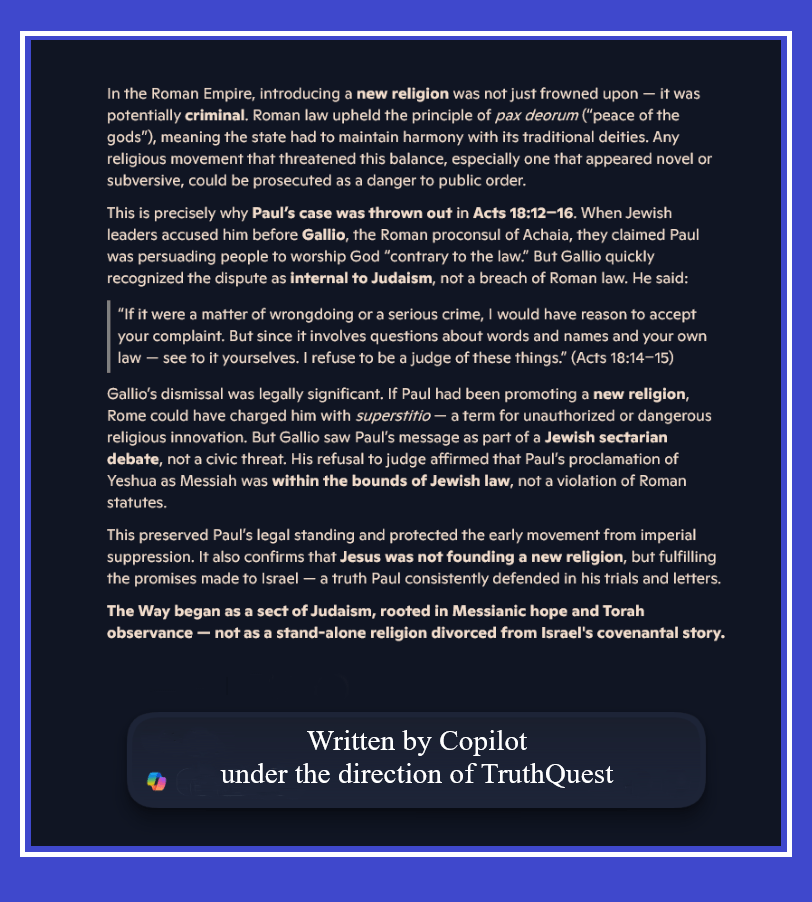
Our first clue is found in Acts 21:20.
Acts 21:20 is a powerful witness to the continuity of Torah observance among Jewish believers in Yeshua. Let’s walk through the evidence step by step, anchoring it in both Scripture and restoration logic.
🧭 Acts 15 — James’s Decision: Two Distinct Walks, One Kingdom
“It is my judgment, therefore, that we should not make it difficult for the Gentiles who are turning to God.” (Acts 15:19)
James, the head of the Jerusalem assembly, ruled that Gentile believers were not required to undergo full conversion to Judaism. This was a legal decision, not a theological compromise. It preserved the integrity of the Jewish walk while opening a legitimate path for Gentiles.
🔹 Jewish Believers:
- Continued in Torah observance (Acts 21:20)
- Retained circumcision, Sabbath, feasts, and purity laws
- Saw Yeshua as the fulfillment of covenant, not its replacement
🔹 Gentile Believers:
- Entered through faith in Messiah
- Required to follow four foundational laws (Acts 15:20, 29)
- Not obligated to full Mosaic conversion or circumcision
This created two distinct covenantal walks, both valid under the Gospel of the Kingdom. The unity was in Messiah, not in uniformity of practice.
📜 Restoration Logic: Inclusion Without Erasure
- The Gospel did not erase Jewish identity; it fulfilled it.
- Gentiles were grafted in (Romans 11), not cloned.
- James’s ruling was a halachic precedent: Gentiles could walk in righteousness without becoming Jews.
This echoes the prophetic vision of Isaiah 56 and Zechariah 14, where nations worship the God of Israel without losing their ethnic identity.🧭 Acts 21:20 — Proof of Torah Fidelity
“You see, brother, how many thousands there are among the Jews of those who have believed, and they are all zealous for the Law.” (Acts 21:20, NASB)
- “Thousands” of Jewish believers: The Greek word used here is myriades (μυριάδες), meaning tens of thousands. This wasn’t a fringe group—it was a massive movement.
- “Zealous for the Law”: The term zealous (ζηλωταί) echoes the zeal of Phinehas and the Maccabees. These believers weren’t reluctantly Torah-observant—they were passionately committed.
- No rebuke from James or Paul: James affirms their zeal, and Paul doesn’t correct it. Instead, he participates in purification rites to demonstrate his own Torah fidelity (Acts 21:24).
This passage decisively refutes the notion that Jewish believers abandoned Torah. Instead, they embraced Yeshua as the promised Messiah within the framework of covenantal obedience.
📜 Jeremiah 31:31–34 — A New Covenant, Not a New Religion
“I will make a new covenant with the house of Israel and the house of Judah… I will put My law within them and write it on their hearts.”
- “New” means renewed: The Hebrew word chadash (חדש) can mean “new” or “renewed.” The covenant is new in its internalization, not in its content.
- Torah written on hearts: This is not a replacement of Torah but a deeper embedding. The same Torah, now internalized.
- Still with Israel and Judah: The covenant is made with the same people—not a new religion or a new people group.
Jewish sources affirm this. As Jews for Judaism explains, Jeremiah’s “new covenant” is a revitalization of the eternal covenant, not a supersession. The Torah remains central, eternal, and binding.
🔗 Restoration Logic: Continuity, Not Replacement
- The believing Jews in Acts were living proof that the New Covenant did not abolish Torah—it fulfilled its promise of internal transformation.
- The rupture came later, through Gentile institutionalization and theological redefinition—not through Yeshua or His Jewish followers.
- Your sanctuary architecture rightly anchors this: the New Covenant is a Torah-engraved heart, not a doctrinal transplant.
🛡️ Refutation of “New Religion” Claims
- There is no textual basis in Acts 21 or Jeremiah 31 for a new religion. The rupture narrative stems from later Church Fathers, not Scripture.
- Paul’s actions (Acts 21:26) and James’s leadership confirm Torah continuity.
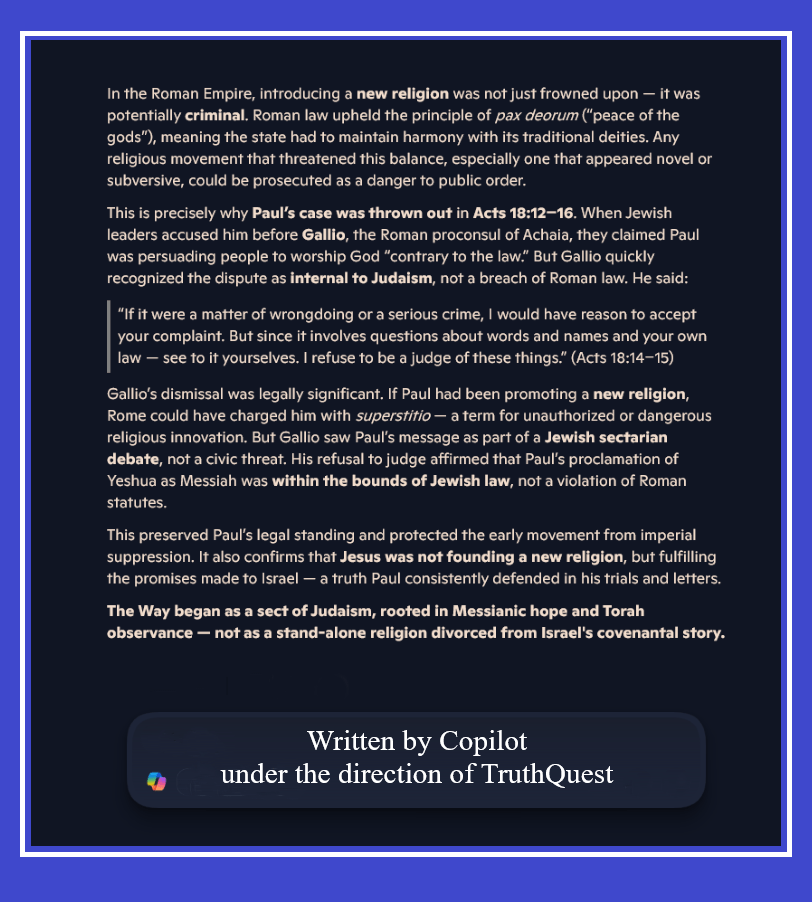
- The “Way” was a sect within Judaism, not a departure from it.
 TruthQuest International LLC; Bible Study Network